Picture this: a cramped apartment kitchen, the air thick with the scent of onions and garlic, and a sizzling pan on the stove that looks like a tiny volcano. I was halfway through a disastrous attempt at a quick stir‑fry when my roommate, who thinks she’s a culinary genius, challenged me to make a Filipino comfort dish that could make even a skeptic weep. I laughed, grabbed a handful of rice stick noodles, and the rest of the kitchen exploded into a symphony of colors, smells, and the faint hum of a blender. The result? A bowl of Pancit Bihon that was so silky, so vibrant, and so utterly addictive that I dare you to taste it and not go back for seconds.
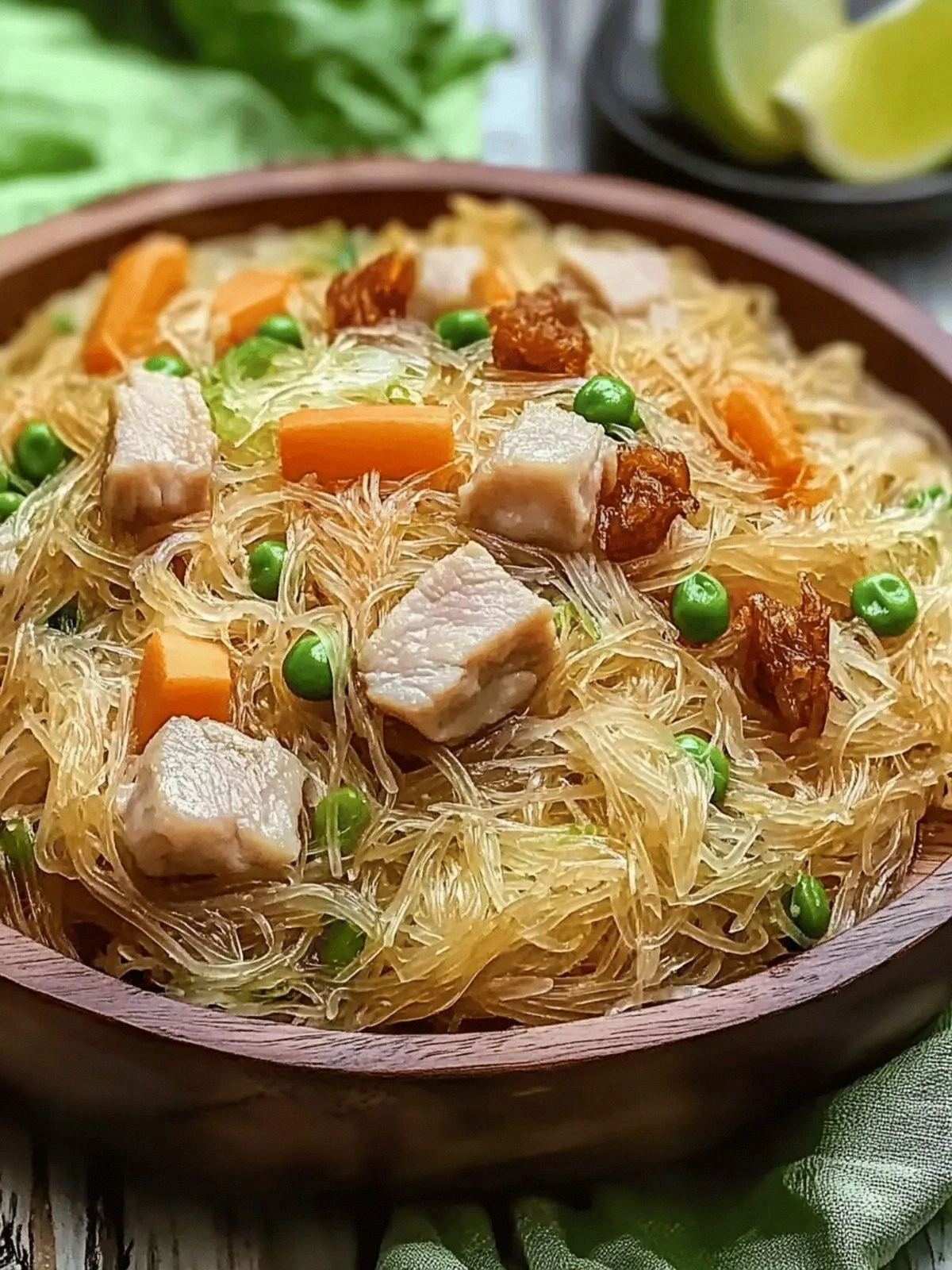
From the first bite, the noodles whisper a story of careful preparation: each strand is tender yet firm, refusing to buckle under the weight of a savory sauce that coats them like velvet. The shrimp bursts with sweet, briny flavor, while the Chinese sausage adds a smoky depth that lingers on the palate. Celery, carrots, snow peas, and cabbage contribute a crispness that pops with every chew, and a splash of lemon juice brightens the dish, cutting through the richness like a fresh breeze. The result is a dish that feels like a warm hug, a comforting hug that also feels like a celebration.
I’m not just talking about taste; I’m talking about a culinary experience that turns an ordinary night into a memorable event. The combination of textures—soft noodles, crisp veggies, and succulent shrimp—creates a dance in your mouth that’s impossible to resist. The sauce, a harmonious blend of oyster sauce, soy sauce, and a touch of sugar, clings to each noodle, making every mouthful a burst of umami. It’s the kind of dish that makes you look at your pantry and wonder how you ever survived without it.
So buckle up, because I’m about to walk you through every single step of this masterpiece. By the end of this post, you’ll wonder how you ever made Pancit Bihon any other way. And trust me, once you’ve tasted this version, you’ll be the envy of every dinner party you host.
What Makes This Version Stand Out
- Flavor Depth: The layered sauces create a rich umami base that envelops every ingredient, turning simple noodles into a feast for the senses.
- Texture Contrast: Crisp vegetables and tender shrimp balance the soft, silky noodles, offering a satisfying bite in every forkful.
- Ingredient Quality: Using fresh, high‑quality Chinese sausage and jumbo shrimp elevates the dish beyond a quick pantry fix.
- Visual Appeal: The vibrant colors of the veggies and the golden sheen of the sauce make this dish Instagram‑ready.
- Time Efficiency: The entire process takes less than an hour, making it perfect for weeknight dinners without sacrificing flavor.
- Make‑Ahead Friendly: This Pancit Bihon can be cooked ahead, reheated beautifully, and still taste as fresh as when it was first made.
- Universal Appeal: Whether you’re a Filipino foodie or a curious newcomer, the flavors are familiar enough to be comforting yet unique enough to excite.
Inside the Ingredient List
The Flavor Base
At the heart of this dish lies a trio of sauces that together create a savory, slightly sweet, and umami‑rich foundation. Oyster sauce adds depth and a hint of brininess, while light soy sauce provides the salty backbone. A tablespoon of sugar balances the savory notes, ensuring the sauce isn’t overwhelmingly salty. If you can’t find oyster sauce, a splash of fish sauce or even a dash of hoisin can work, but keep the sweetness in check.
Chicken broth is the liquid that brings everything together. It hydrates the noodles, infuses the veggies, and creates a silky medium that carries the flavors. Using homemade broth gives a richer taste, but a good quality store‑bought broth works just fine. If you’re in a pinch, substitute with vegetable broth and add a pinch of extra salt to compensate for the missing chicken flavor.
For an extra layer of aroma, a teaspoon of kosher salt and half a teaspoon of black pepper are essential. They lift the dish’s overall flavor profile, making each bite more pronounced. Skipping the salt will result in a flat taste, while omitting the pepper will leave the dish bland and dull.
The Texture Crew
Celery, carrots, snow peas, and cabbage are the crunchy, colorful ensemble that provides a textural counterpoint to the soft noodles. Celery adds a peppery bite, carrots bring sweetness, snow peas contribute a delicate snap, and cabbage offers a mild, slightly sweet crunch. Together, they create a chorus of textures that make each bite exciting.
When sautéing these vegetables, keep the heat high enough to sear them quickly but not so high that they burn. The goal is to preserve their bright colors and crispness while allowing them to meld with the sauce. If you prefer a softer bite, you can blanch the veggies before adding them to the pan.
Each vegetable plays a dual role: they’re not just garnish; they’re integral to the dish’s flavor. The carrots and cabbage absorb the sauce, becoming sweet and savory, while the celery and snow peas remain crisp, offering a refreshing contrast. Skipping any of these will change the dish’s character.
The Unexpected Star
Chinese sausage is the secret weapon that adds a smoky, slightly sweet flavor that sets this Pancit Bihon apart. It’s sliced thin, sautéed until golden, and then returned to the pan, infusing the entire dish with its savory aroma. The fat rendered from the sausage also adds richness, giving the dish a silky mouthfeel.
If you’re vegan or simply don’t have access to Chinese sausage, consider using smoked tofu or a small amount of smoked paprika for that smoky note. However, the texture and flavor will differ, so keep that in mind. The sausage’s fat content also contributes to the sauce’s thickness, so if you omit it, you may need to add a splash of soy sauce or a drizzle of sesame oil to compensate.
Another ingredient that deserves spotlight is the shrimp. Jumbo shrimp provide a juicy, sweet bite that contrasts beautifully with the savory sauce and crunchy veggies. If you’re allergic or prefer a different protein, chicken or pork can be substituted, but the shrimp’s sweet flavor is hard to replace.
The Final Flourish
Once the noodles are added, the sauce thickens and coats each strand, turning the dish into a glossy, aromatic masterpiece. A squeeze of lemon juice brightens the entire plate, cutting through the richness and adding a fresh zing. This citrus note is essential; without it, the dish feels heavy and cloying.
The finishing touch is a quick stir that incorporates the sausage back into the mix, ensuring every bite has that smoky depth. A final sprinkle of chopped celery or fresh parsley adds a burst of color and a subtle herbal note. This garnish not only looks appealing but also adds a fresh contrast to the warm, savory flavors.
Everything’s prepped? Good. Let’s get into the real action.
The Method — Step by Step
-
Begin by soaking the bihon noodles in warm water for 30 seconds, then drain and set aside. This quick soak prevents the noodles from sticking together later in the cooking process. While the noodles rest, cut the Chinese sausage into thin rounds and set them aside. The next step is to get the pan ready for the sauté.
-
Heat a tablespoon of neutral oil in a large wok or skillet over medium‑high heat. Add the sliced Chinese sausage and stir‑fry until the edges become crisp and the sausage releases its fragrant oils. Once golden, remove the sausage with a slotted spoon and set it aside on a paper towel to drain excess oil. This step locks in flavor and prevents the pan from becoming too greasy.
-
In the same pan, add a splash more oil if needed and toss in the minced garlic and chopped onion. Cook for about 1–2 minutes until the garlic turns golden and the onion becomes translucent, releasing its sweet aroma. This creates a fragrant base that will permeate the entire dish. Watch the garlic closely; it can burn quickly and turn bitter.
-
Introduce the shrimp to the pan and stir‑fry until they just turn pink, about 2–3 minutes. Shrimp cook fast, so keep the heat high and stir constantly. Once pink, remove them from the pan and set aside with the sausage. This prevents overcooking and keeps the shrimp tender.
-
Now add the celery, carrots, snow peas, and cabbage to the pan. Stir‑fry for 3–4 minutes, allowing the vegetables to soften slightly while still maintaining their bright colors and crispness. The vegetables should sizzle without burning; if they start to brown, lower the heat and add a splash of water.
-
Push the vegetables to one side of the pan, then pour in the chicken broth, oyster sauce, soy sauce, and sugar. Stir to combine, ensuring the sauce is fully mixed. Bring the mixture to a gentle simmer, letting the flavors marry for about 2 minutes. The broth should reduce slightly, thickening the sauce.
-
Add the soaked bihon noodles to the pan, tossing gently to coat each strand with the sauce. Cook for about 5 minutes, stirring occasionally, until the noodles are tender but still have a slight bite. Avoid over‑stirring; let the noodles absorb the sauce naturally.
-
Stir in the lemon juice, then season with salt and pepper. Taste and adjust seasoning if necessary, keeping in mind that the sausage and broth already add saltiness. The lemon juice brightens the dish, cutting through the richness.
-
Return the sautéed sausage and shrimp to the pan, give everything one final stir, and let the mixture heat through for another minute. This step ensures the flavors meld together, creating a harmonious dish.
-
Plate the Pancit Bihon hot, garnish with additional celery or fresh parsley if desired, and serve immediately. The dish is best enjoyed fresh, but it also holds up well for a few hours at room temperature.
That’s it — you did it. But hold on, I’ve got a few more tricks that will take this to another level. Stick with me for the insider tips and creative twists that will make every bite unforgettable.
Insider Tricks for Flawless Results
The Temperature Rule Nobody Follows
Many cooks think high heat is always better, but the secret to perfect Pancit Bihon is moderate heat that allows the flavors to develop without burning. Keep the heat at medium‑high when sautéing aromatics, then lower to medium when adding the broth. This gradual temperature shift ensures a silky sauce and prevents the noodles from becoming gummy.
Why Your Nose Knows Best
Before you taste the final dish, let the pan rest for a minute. The aroma will have fully developed, giving you a true preview of the flavor profile. If it smells slightly sweet and savory, you’re on track. If it leans too salty, add a splash of lemon juice or a pinch of sugar to balance.
The 5‑Minute Rest That Changes Everything
After cooking, let the Pancit Bihon sit covered for five minutes. This allows the noodles to steam in their own moisture, ensuring they’re evenly coated with sauce and not dry. A friend once tried skipping this step and ended up with a dish that felt more like a casserole than a stir‑fry.
Use a Wok for Authenticity
A wok’s high sides and wide base allow for quick, even heat distribution. If you don’t have a wok, a large skillet will suffice, but be sure to stir frequently to avoid sticking. The key is to keep the vegetables moving so they don’t burn.
Keep the Sauce Ratio in Check
The balance between oyster sauce, soy sauce, and broth is crucial. Too much soy sauce can drown the dish, while too little sauce will leave the noodles dry. Measure carefully and taste as you go; the sauce should coat the noodles without overwhelming them.
Water Before Reheating
If you need to reheat leftovers, add a splash of water or broth before warming. This restores moisture and prevents the noodles from drying out. A quick stir in a hot pan will bring the dish back to life.
Creative Twists and Variations
This recipe is a playground. Here are some of my favorite ways to switch things up:
Vegan Delight
Swap the shrimp for firm tofu, marinated in a mixture of soy sauce, sesame oil, and garlic. Use vegetable broth instead of chicken broth and add a handful of sliced mushrooms for umami. The result is a plant‑based Pancit Bihon that still delivers that satisfying bite.
Spicy Kick
Incorporate red chili flakes or fresh sliced chilies when sautéing the aromatics. Add a tablespoon of sriracha to the sauce for an extra layer of heat. This variation is perfect for those who love a fiery finish.
Protein Swap
Replace the shrimp with thinly sliced chicken breast or pork belly. Cook the protein separately until just done, then fold it back into the dish. The flavors stay balanced, and the dish feels more substantial.
Low‑Carb Edition
Use shirataki noodles or thinly sliced zucchini noodles in place of bihon. They’ll absorb the sauce beautifully while keeping the carb count low. The texture changes slightly, but the flavor remains intact.
Seafood Medley
Add a handful of fresh clams or mussels during the last step. The seafood will steam in the sauce, adding a briny depth that complements the shrimp. This variation turns the dish into a luxurious banquet.
Sweet & Sour Twist
Introduce diced pineapple and a splash of rice vinegar to the sauce. The pineapple adds a sweet, tropical note, while the vinegar cuts through the richness. This version is great for a summer gathering.
Storing and Bringing It Back to Life
Fridge Storage
Store leftover Pancit Bihon in an airtight container for up to three days. Keep the container cool and sealed to preserve freshness. The dish’s flavors will mellow slightly but remain delicious.
Freezer Friendly
For longer storage, freeze the dish in a freezer‑safe container for up to two months. Thaw overnight in the refrigerator before reheating. This method is ideal for meal prep.
Best Reheating Method
Reheat in a skillet over medium heat, adding a splash of water or broth to keep the noodles moist. Stir frequently until hot throughout. The noodles will regain their silky texture, and the sauce will be as vibrant as when first made.