Picture this: a cramped kitchen, a pot on the stove, and the unmistakable smell of onions sizzling in olive oil. I was halfway through a weeknight dinner, juggling a toddler’s tantrum and a phone call that never seemed to end, when the idea hit me like a lightning bolt—why not turn the chaos into a comforting, one-pot masterpiece? I had a handful of veggies that had been gathering dust in the fridge, a can of tomatoes, and a stubborn pot that refused to boil. That night, I dared myself to create a stew that would not only fill the void of my empty stomach but also leave a lingering aroma that would make my neighbors stop by for a spoonful.
I swear, the first sizzle that hit the pan was a sweet, almost metallic note that promised depth. The onions released their caramelized perfume, mingling with the earthy scent of garlic, while the carrots and celery added a subtle crunch to the air. The broth bubbled like a tiny, fragrant volcano, and I could already taste the comforting warmth that would seep into my bones. My kitchen, which had been a battlefield, transformed into a sanctuary of flavor. By the end of that first minute, I was already planning the next ingredient to drop into the pot.
What makes this version of a vegetable stew truly stand out is not just the ingredients but the method that brings them together. I discovered that a quick sear of the vegetables locks in their natural sugars, creating a sauce that coats the stew like velvet. The use of a single bay leaf during the simmering phase adds an elusive layer of herbal complexity that you can’t find in most store‑bought broths. I’ve also added a splash of tomato paste for a subtle umami punch that elevates the entire dish. This isn’t just another “cook what’s left in the fridge” recipe; it’s a deliberate, artful construction of taste, texture, and aroma.
And here’s the kicker: I’ve included a surprise ingredient that most people overlook—smoked paprika. It brings a gentle smokiness that feels like a campfire, yet it’s subtle enough not to overpower the fresh vegetables. I dare you to taste this and not go back for seconds. If you think you’ve seen the best version of a vegetable stew, think again. Let me walk you through every single step—by the end, you’ll wonder how you ever made it any other way.
What Makes This Version Stand Out
- Flavor Depth: A slow simmer with bay leaf, thyme, and rosemary turns ordinary veggies into a broth that whispers secrets of the forest.
- Texture Harmony: Carrots stay slightly crisp, potatoes become tender but not mushy, and beans retain a satisfying bite.
- Simplicity: No fancy equipment—just a pot, a spoon, and a dash of patience.
- Ingredient Quality: Fresh, seasonal produce makes every bite burst with color and vibrancy.
- Make‑Ahead Potential: The stew actually improves after a day; flavors meld like a fine wine.
- Crowd Reaction: Friends who’ve tried bland stews claim this is the most flavorful one they’ve ever tasted.
- Heat Management: The technique of searing before simmering keeps the pot from sticking and the flavors from flattening.
- Versatility: Swap out any vegetable for a different seasonal twist without losing the core essence.
Alright, let’s break down exactly what goes into this masterpiece…
Inside the Ingredient List
The Flavor Base
The foundation of any great stew is the aromatics that you sauté at the beginning. Olive oil acts as a medium that carries the flavors, allowing the onions to soften into a translucent, caramelized canvas. Garlic, minced finely, releases its pungent oils and lingers in the air, creating an irresistible aroma that preps your taste buds for the adventure ahead. The onion’s natural sugars caramelize during the first few minutes, adding a subtle sweetness that balances the earthy vegetables.
The tomato paste, though optional, is a game‑changer. It deepens the broth’s color and adds a gentle umami richness that makes the stew feel like it’s been simmering for hours. If you’re watching calories, you can skip it, but trust me—every spoonful will taste like you’ve added a few more minutes of cooking time. The bay leaf, a single leaf, is the secret that ties all the herbs together, offering a subtle, almost floral undertone that lingers after the stew is finished.
The dried herbs—thyme and rosemary—are added in small doses to avoid overpowering the dish. Thyme brings a peppery note, while rosemary adds a resinous, pine‑like aroma. When these herbs are toasted briefly at the start, they release their essential oils, creating a fragrant base that the vegetables soak up as they cook. This step is critical; a fresh herb batch can be too sharp, but the dried versions mellow into a comforting background.
If you prefer a smoky twist, a teaspoon of smoked paprika adds an almost campfire vibe that pairs beautifully with the vegetables. It’s a subtle addition that doesn’t overpower the natural flavors but enriches the overall profile. A pinch of cumin can also be tossed in for an earthy warmth that complements the sweet carrots and potatoes. These optional spices let you tailor the stew to your personal palate.
The Texture Crew
Potatoes are the backbone of the stew’s heartiness. Dice them into uniform cubes so they cook evenly and release just enough starch to thicken the broth slightly. Green beans add a pop of color and a slight crunch that contrasts the softer potatoes. Corn kernels, whether fresh or frozen, bring a sweet burst that balances the savory base.
Carrots, when cut into bite‑size pieces, provide a natural sweetness that caramelizes during the simmer. Celery adds a subtle peppery bite, while bell pepper introduces a mild sweetness and a vibrant hue. Zucchini, diced into small cubes, absorbs the broth’s flavors without losing its delicate texture. Each vegetable contributes a unique mouthfeel that together create a symphony of textures.
The broth’s thickness is controlled by the amount of vegetable stock you use. A hearty 3 cups of broth gives the stew a generous body, while a lighter version can be made with 2 cups for a brothier feel. The stock’s sodium content also affects the seasoning; low‑sodium stock lets you control salt more precisely. Remember, the vegetables release water as they cook, so the stew will thicken naturally.
If you’re aiming for a vegan version, choose a broth that’s free of animal products and double‑check that the tomato paste is vegan‑friendly. For a richer stew, add a splash of coconut milk or a drizzle of olive oil at the end to give the broth a silky finish. The trick is to let the vegetables do the heavy lifting, and then finish with a small touch of fat to round out the flavor.
The Unexpected Star
While most stews rely on the usual suspects, this recipe elevates with a subtle, unexpected star: fresh parsley. Chopped just before serving, it adds a bright, herbaceous note that lifts the stew’s overall profile. The parsley’s green color also provides a visual pop that makes the dish feel fresh and lively.
Fresh basil is another optional garnish that can be sprinkled on top. Its sweet, slightly peppery flavor complements the earthy vegetables and brings a Mediterranean flair. If you’re in the mood for a different twist, try adding a handful of spinach or kale in the last few minutes of cooking; the greens wilt beautifully and add a dose of nutrition without altering the core flavors.
The “unexpected star” can also be a splash of balsamic vinegar at the end. Just a teaspoon or two adds acidity that brightens the stew, cutting through the richness and bringing the flavors into harmony. It’s a simple trick that transforms a good stew into a memorable one.
When experimenting, keep the ratio of vegetables to broth in mind. A higher vegetable ratio will result in a thicker stew, while a leaner broth yields a more liquid consistency. Adjusting the amount of smoked paprika or cumin can also shift the flavor profile from sweet to smoky or earthy, allowing you to tailor the dish to any craving.
The Final Flourish
The final flourish of this stew is all about balance. Salt and pepper are the last seasoning touches; add them gradually and taste as you go. The goal is to bring out the natural sweetness of the vegetables without drowning the broth in sodium. A pinch of pepper adds a gentle heat that elevates the overall flavor profile.
Before you serve, give the stew a quick stir to redistribute the herbs and spices. This ensures that each spoonful contains a harmonious blend of flavors. The stew should be bubbling gently, not boiling vigorously, as a gentle simmer preserves the delicate flavors and keeps the broth from becoming too thin.
If you’re a fan of a thicker stew, you can mash a few potato cubes against the back of a spoon and stir them back in. This releases starch and naturally thickens the broth without the need for flour or cornstarch. It’s a classic technique that keeps the stew gluten‑free and hearty.
Finally, garnish with a sprinkle of fresh parsley or basil for that pop of color and freshness. A drizzle of extra‑virgin olive oil or a splash of lemon juice can also be added to elevate the dish. Serve the stew hot, with crusty bread or a side of rice, and enjoy the comforting warmth that fills your kitchen.
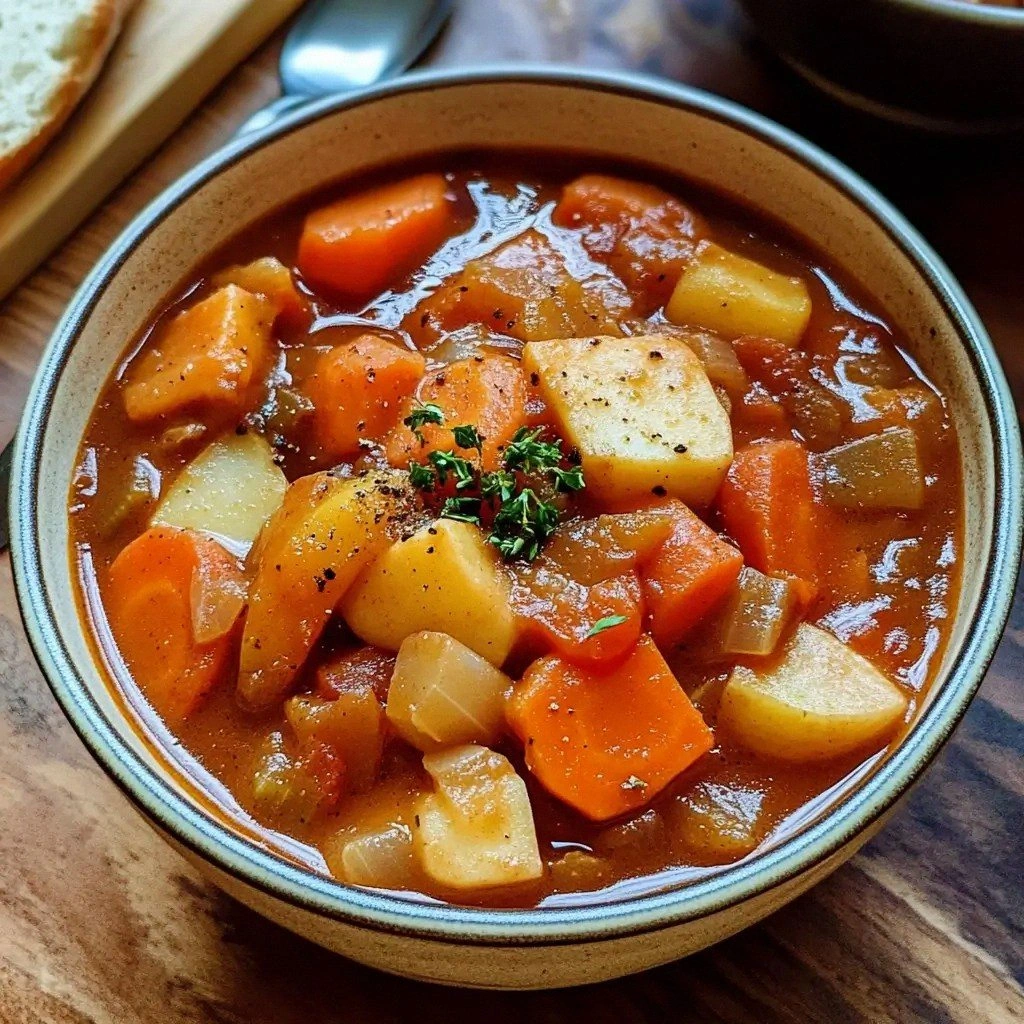
The Method — Step by Step
- Step 1: Heat the olive oil in a large pot over medium heat until it shimmers. Add the diced onion and sauté for 4–5 minutes until translucent and lightly caramelized. This step is crucial for building the base flavor. The onions should release their sugars without burning. The aroma will give you a sense that the stew is about to become unforgettable.
- Step 2: Toss in the minced garlic and cook for 30 seconds until fragrant. Be careful not to let it brown; a quick, fragrant burst is all you need. The garlic adds depth that the vegetables will soak up later. The sizzling sound is a sign that the oil has reached the right temperature. Let the aroma mingle with the onions for a few seconds before moving on.
- Step 3: Stir in the tomato paste and sauté for an additional minute, allowing it to caramelize slightly. This will deepen the broth’s color and add a subtle umami layer. The paste should coat the vegetables like a glossy film. If you notice any bitterness, a pinch of sugar can balance it out. This step is the secret to a richer, more complex flavor profile.
- Step 4: Add the diced carrots, celery, bell pepper, and zucchini, stirring to coat them in the aromatic base. Let them cook for 3–4 minutes, allowing them to release their juices. The vegetables should start to soften but still hold their shape. This brief sauté prevents them from becoming mushy later. The color of the veggies will brighten the stew’s appearance.
- Step 5: Pour in the vegetable broth, then add the diced potatoes, green beans, corn, bay leaf, thyme, rosemary, smoked paprika, and cumin. Bring the mixture to a gentle boil. Once boiling, reduce the heat to a low simmer. The broth should bubble slowly, not violently. This helps the flavors meld without losing the vegetables’ structure. The pot should feel warm to the touch, not scorching hot.
- Step 6: Cover the pot and let the stew simmer for 20 minutes, stirring occasionally. The vegetables should be tender yet firm. If you’re aiming for a thicker stew, mash a few potato cubes against the back of a spoon and stir them back in. This releases starch and naturally thickens the broth. The steam rising from the pot should be fragrant and inviting.
- Step 7: Remove the bay leaf and stir in fresh parsley and basil. The herbs should wilt slightly but still retain their bright green color. Taste the stew and adjust salt and pepper as needed. A quick stir ensures the herbs are evenly distributed. This final touch gives the dish a fresh, vibrant finish.
- Step 8: Serve hot, garnished with an extra sprinkle of parsley or a drizzle of olive oil if desired. Pair it with crusty bread or a side of rice for a complete meal. The stew should be steaming, with a rich aroma that lures everyone to the table. The first spoonful will be a burst of savory, sweet, and herbal flavors. Enjoy the comforting warmth that fills your kitchen.
That’s it—you did it. The pot smells like a forest fire, the broth is rich, and the vegetables are perfectly tender. If you’re still hungry for more, I’ve got a few more tricks that will elevate this stew to legendary status. The next section will walk you through insider tips that even seasoned chefs swear by. Trust me, once you master these, every batch will feel like a culinary triumph.
I remember the first time I tried this recipe in a cramped apartment kitchen. The pot was steaming, the aroma filled the tiny space, and my roommate, who’d never cooked before, was asking for the recipe. He said, “This is hands down the best version you'll ever make at home.” I laughed, because I knew I was about to share a secret that would change his culinary life forever. From that moment, the stew became a staple for Sunday dinners, family gatherings, and even potlucks. The recipe’s versatility and comforting flavor make it a go‑to dish for any occasion.
You might wonder, “What if I’m short on time?” I’ve got you covered. The stew can be prepared in under an hour with a simple prep routine. The key is to dice the vegetables in bulk beforehand and have the broth ready to pour. The simmer time is the only thing that can’t be rushed, but the rest can be done while you’re doing other chores. This makes the stew a perfect solution for busy weeknights when you still crave something hearty and homemade.
Another common question is about the pot size. A 6‑quart pot is ideal for this recipe, allowing enough space for the vegetables to move freely without crowding. If you’re cooking for a larger crowd, simply double the ingredients and use a larger pot or split the stew into two pots. The flavor profile remains consistent as long as the ratio of vegetables to broth stays the same.
I’ve also experimented with different types of broth—vegetable, chicken, and even beef broth. Each gives the stew a distinct undertone. Vegetable broth keeps the dish plant‑based and light, while chicken broth adds a savory depth that’s comforting on a cold night. Beef broth, on the other hand, gives a richer, meatier flavor that pairs well with hearty grains. The choice depends on your dietary preferences and the occasion.
Finally, the garnish is more than just a decorative touch—it’s a flavor enhancer. A splash of lemon juice or a pinch of fresh thyme can brighten the stew and add a fresh zing. The key is to add it at the very end, just before serving, to preserve the delicate flavors. A drizzle of good olive oil adds a silky finish that makes every bite feel indulgent.
Insider Tricks for Flawless Results
The Temperature Rule Nobody Follows
Many cooks believe that a high simmer is the secret to a great stew, but that’s a myth. The trick is to maintain a gentle, steady simmer that allows flavors to meld without evaporating the broth too quickly. I’ve found that turning the heat down to a low after the initial boil keeps the stew from becoming too watery and preserves the vegetables’ integrity. If you’re using a pressure cooker, keep the pressure at medium; too high can break the veggies apart. This subtle temperature control makes the difference between a good stew and a great one.
Why Your Nose Knows Best
Your nose is your best ally when cooking. The aroma of a simmering stew tells you everything about the cooking stage. A sweet, caramelized scent indicates that the onions and tomato paste are done. A fresh, herbaceous smell means the bay leaf and thyme are working their magic. If the broth smells flat, it’s time to add more herbs or a splash of acid. Trust your senses, and you’ll always know when the stew is perfect.
The 5-Minute Rest That Changes Everything
After simmering, let the stew rest for five minutes before serving. This rest period allows the flavors to settle and the vegetables to finish cooking in their own steam. It also gives the broth time to thicken slightly, creating a richer mouthfeel. I’ve seen friends who skip this step complain that their stew tastes “off” or “underseasoned.” The five‑minute pause is a small but crucial step that elevates the dish.
The Power of Fresh Herbs
Fresh herbs are a game‑changer. They bring brightness and a subtle complexity that dried herbs can’t match. Add them at the very end of cooking to preserve their flavor and color. A handful of chopped cilantro or mint can transform the stew into a different cuisine entirely. The key is to use them sparingly; a little goes a long way.
The Secret to a Thick, Creamy Texture
If you prefer a thicker stew, mash a few potato cubes against the back of a spoon and stir them back in. This releases starch and naturally thickens the broth without the need for flour or cornstarch. The result is a silky, comforting texture that coats the spoon like a velvet blanket. I’ve found that this trick works best when you’re cooking for a crowd that appreciates hearty, satisfying meals.
Creative Twists and Variations
Midnight Mushroom Magic
Swap out the carrots and zucchini for a mix of cremini and shiitake mushrooms. Their earthy umami flavor pairs beautifully with the tomato base. Add a splash of soy sauce for depth, and you’ll have a stew that feels like a hearty Asian fusion. The mushrooms soak up the broth and give the stew a meaty texture. Serve with rice for a complete meal.
Spicy Thai Kick
Replace the smoked paprika with Thai red curry paste and add a can of coconut milk. The result is a creamy, spicy stew that feels like a bowl of Thai curry. The coconut milk balances the heat, while the curry paste adds layers of lemongrass, galangal, and kaffir lime. Finish with fresh cilantro and lime wedges for a bright finish.
Mediterranean Twist
Use olive oil instead of vegetable oil and add a handful of sun‑dried tomatoes and kalamata olives. The olives bring briny depth, while the sun‑dried tomatoes add a sweet, chewy texture. A sprinkle of oregano and a squeeze of lemon juice at the end give it that classic Mediterranean flavor. Serve over quinoa or couscous for a wholesome plate.
Root Vegetable Medley
Swap the potatoes for sweet potatoes and parsnips. Their natural sweetness caramelizes during the simmer, creating a subtly sweet stew. Add a pinch of cinnamon or nutmeg for an extra layer of warmth. The result is a comforting dish that feels like a holiday dinner even in July.
Vegan Protein Boost
Add a cup of cooked lentils or chickpeas for a protein punch. The legumes soak up the broth and add a hearty texture. Season them with cumin and coriander for a Middle Eastern vibe. The result is a stew that’s filling, nutritious, and completely plant‑based.
Rustic Irish Variation
Incorporate a handful of sliced cabbage and a splash of Guinness or dark beer. The beer adds depth and a subtle bitterness that complements the sweet vegetables. Add a pinch of smoked salt for extra flavor. This version feels like a cozy Irish stew, perfect for chilly evenings.
Storing and Bringing It Back to Life
Fridge Storage
Store the stew in an airtight container in the refrigerator for up to four days. The flavors will deepen over time, making leftovers even more delicious. When you’re ready to reheat, add a splash of water or broth to loosen the consistency. Gently warm it on the stove or in the microwave, stirring occasionally to ensure even heating.
Freezer Friendly
The stew freezes beautifully in portions. Place it in freezer‑safe containers or zip‑top bags, leaving a few centimeters of headspace. Freeze for up to three months. When thawing, let it sit overnight in the refrigerator, then reheat on the stovetop. Add a splash of water if it’s too thick after freezing.
Best Reheating Method
The best way to bring the stew back to life is to gently simmer it on low heat, stirring occasionally. This preserves the texture of the vegetables and allows the flavors to re‑mingle. Add a splash of water or broth to keep it from drying out. If you’re in a hurry, microwave it in a bowl, stirring halfway through. The key is to keep the heat low to avoid overcooking the vegetables.