I was standing in my kitchen on a chilly October evening, the kind of night where the wind whistles through the trees like an impatient orchestra, and I realized my friends were about to arrive for the annual “pumpkin‑spice‑everything” party. I had the usual suspects on standby—store‑bought cider, a cheap bottle of wine, and a handful of pre‑sliced fruit—but something felt off, like a song missing its chorus. I tossed a cinnamon stick into a pot of simmering cider, added a splash of brandy, and watched the liquid swirl with the deep, ruby hue of a sunset. The moment the aroma hit my nostrils—spiced apples, a whisper of cloves, and that unmistakable warm kiss of maple—I knew I’d stumbled onto something that could change the way we think about fall drinks forever.
Picture this: a glass filled to the brim with ruby‑red wine, flecks of orange zest dancing on the surface, and a garnish of crisp apple slices that glisten like polished amber. You take a sip, and the first thing that hits you is the bright pop of fresh orange, followed by the comforting hug of cinnamon and a subtle, buttery sweetness from the maple. It’s as if autumn itself decided to throw a party in your mouth, and every guest is invited to stay. Most sangria recipes try to be clever by loading on sugary syrups or cheap fruit, but they end up tasting like a watered‑down cocktail that screams “budget” instead of “cozy night by the fire.” Not this one. This version respects each ingredient, letting the apple cider do the heavy lifting while the wine adds depth, and the brandy provides that extra kick you didn’t know you were missing.
The secret weapon? Fresh, unfiltered apple cider. I’ve tried bottled apple juice in the past and it’s like trying to watch a movie in black‑and‑white when you could have 4K HDR. The cider brings a natural tartness that balances the sweet maple and the bright citrus, and it carries the spice notes like a seasoned storyteller carrying a tale across a room. I dare you to taste this and not go back for seconds; I’ll be honest — I ate half the batch before anyone else got to try it, and that’s a confession I’m not ashamed of. This isn’t just a drink; it’s an experience, a conversation starter, a reason to linger longer at the party.
Okay, ready for the game‑changer? In the next sections I’ll walk you through every single step — from selecting the perfect apples to the exact moment you add that fizzy splash of club soda. By the end, you’ll wonder how you ever made sangria any other way. Stay with me here — this is worth it.
What Makes This Version Stand Out
- Taste: The marriage of dry red wine with sweet maple‑infused apple cider creates a flavor profile that’s both sophisticated and comfort‑food‑worthy.
- Texture: Crisp apple and pear slices stay firm, offering a satisfying bite that contrasts beautifully with the silky liquid.
- Simplicity: Fewer steps, no complicated muddling equipment, just a large pitcher and a handful of spices.
- Uniqueness: Using whole cloves and cinnamon sticks for a gentle infusion instead of ground spices avoids bitterness.
- Crowd Reaction: Guests often claim it’s “the best sangria they’ve ever had,” and you’ll hear that phrase on repeat throughout the night.
- Ingredient Quality: Fresh, cold‑pressed apple cider and a good‑quality Merlot or Cabernet give the drink a depth you can’t fake.
- Method: A quick cold‑infusion followed by a short rest lets the flavors meld without any tedious waiting.
- Make‑Ahead Potential: Prepare the base a day ahead, refrigerate, and add the fizz just before serving for a stress‑free party.
Alright, let's break down exactly what goes into this masterpiece...
Inside the Ingredient List
The Flavor Base
Apple cider is the heart and soul of this sangria. Its natural acidity cuts through the richness of the red wine, while its inherent sweetness pairs perfectly with maple syrup. If you substitute apple juice, you’ll end up with a cloyingly sweet drink that lacks the depth of a true cider. Look for a cold‑pressed, unfiltered variety for maximum flavor; you’ll notice the difference the moment the liquid hits the glass. A good tip: buy a small batch from a local orchard in the fall, because the apples are at their peak.
The Spirit Layer
Red wine brings the adult sophistication to the mix. A dry Merlot or Cabernet Sauvignon offers fruit‑forward notes that echo the apple and pear, while a hint of tannin adds structure. The brandy (or cognac) is the secret weapon that adds warmth and a subtle spice that makes the drink feel like a cozy blanket. If you’re looking for a lighter version, you can cut the brandy in half or skip it, but you’ll miss that extra depth that makes the cocktail unforgettable.
The Texture Crew
Apples, pears, and oranges provide the crunch and juicy bursts that keep each sip interesting. Choose firm varieties like Honeycrisp or Granny Smith for apples, and Bartlett or Bosc for pears; they stay crisp even after soaking in the liquid. Oranges add a bright citrus pop and a splash of color that makes the pitcher look as good as it tastes. If you accidentally pick a soft apple, it will turn mushy and muddy the drink, so a quick press test (a firm apple should give a little under pressure) is essential.
The Unexpected Star
Maple syrup is the unsung hero that ties everything together. Unlike refined sugar, it brings a woody, caramel‑like nuance that echoes the autumn theme. A tablespoon or two is enough to sweeten the cider without overwhelming the natural fruit flavors. If you’re allergic to maple or prefer a vegan option, agave nectar works as a substitute, though it will shift the flavor profile slightly toward a lighter sweetness.
The Final Flourish
Cinnamon sticks and whole cloves are the spice duo that turn a simple sangria into a fall masterpiece. They release their aroma slowly, ensuring the drink never becomes bitter. Add them at the beginning of the infusion and remove before serving for a balanced spice level. Finally, club soda adds a refreshing fizz that lifts the heavy fruit and spice notes, turning each glass into a lively, effervescent experience. If you prefer a non‑carbonated version, simply omit the soda and let the sangria sit a little longer to develop more depth.
Everything's prepped? Good. Let's get into the real action...
The Method — Step by Step
Start by pouring 2 cups of fresh apple cider into a medium‑sized saucepan. Add 2 cinnamon sticks and 4 whole cloves, then bring the mixture to a gentle simmer over medium‑low heat. You’ll hear a soft hiss as the spices start to release their aroma—think of a cozy campfire in a mug. Let it simmer for exactly 10 minutes; this is the moment of truth where the cider absorbs the warm spice without turning bitter. After the time is up, remove the pan from heat and let the infusion cool to room temperature.
While the cider cools, slice your fruit. Core and thinly slice 2 firm apples, then cut 2 pears into bite‑size wedges, leaving the skins on for extra color. Slice 1 orange into thin rounds, and zest the orange before you cut—this zest will be added later for a burst of citrus oil. Finally, juice one lemon and set the juice aside; the acidity will balance the sweetness later on. Kitchen Hack: Place the sliced fruit in a bowl of cold water with a splash of lemon juice to keep them from oxidizing and turning brown.
In a large, airtight pitcher (at least 2‑liter capacity), combine the cooled spiced cider with 1 bottle (750 ml) of dry red wine. Pour in ¼ cup of brandy, then drizzle in 2 tablespoons of maple syrup. Stir gently with a wooden spoon; you’ll notice the syrup slowly dissolving, creating a glossy sheen that clings to the fruit. This is where the magic starts to happen, and the scent of wine mingling with apple and spice fills the kitchen—an aroma that practically begs for a glass.
Add the prepared fruit—apple slices, pear wedges, orange rounds, and the lemon juice—directly into the pitcher. Toss everything together so the fruit is evenly distributed. The fruit will begin to soak up the liquid, turning the cider a deeper amber hue. Let the mixture sit at room temperature for 15 minutes, then give it a gentle stir. This short rest allows the fruit to release its juices, creating a natural sweet‑and‑tart infusion without any added sugar.
Cover the pitcher with plastic wrap or a lid and refrigerate for at least 2 hours, preferably overnight. This is the “wait for it” stage where flavors meld together. If you’re impatient, you can speed it up by placing the pitcher in a shallow ice bath, but the true depth of flavor only emerges after a slow, cold infusion.
Just before serving, give the pitcher a final gentle stir, then top it off with 1 cup of chilled club soda. The soda should be added slowly to preserve its fizz—watch as tiny bubbles rise like fireflies in the amber liquid. Taste the sangria; if it needs a touch more sweetness, drizzle an extra half‑tablespoon of maple syrup. If the acidity feels too sharp, a splash more lemon juice will bring it back into balance.
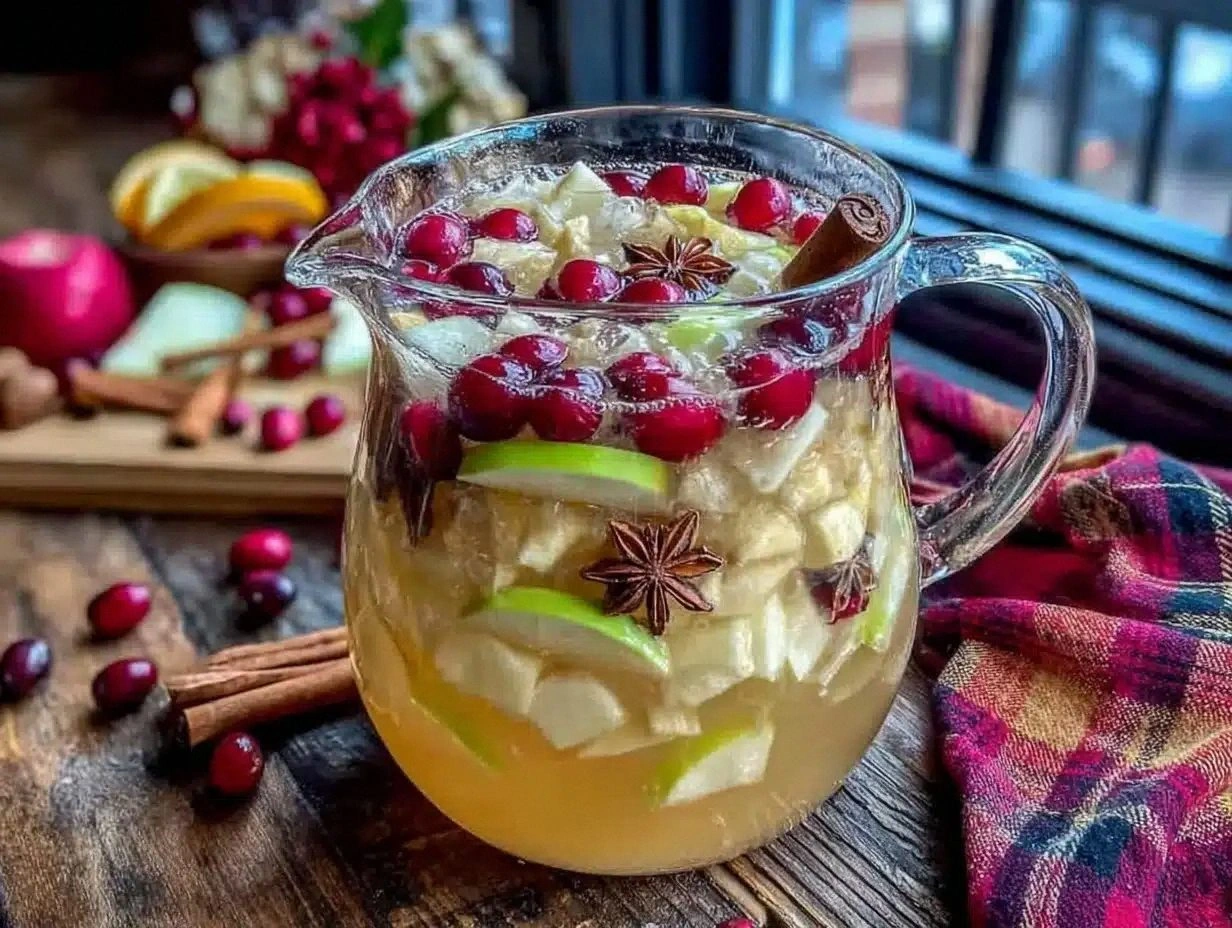
Serve the sangria in clear glasses, making sure each pour includes a mix of fruit pieces. Garnish each glass with a fresh cinnamon stick for an extra aromatic touch, and optionally a thin orange slice on the rim. The final presentation should look like a miniature autumn landscape—rich, colorful, and inviting. Pair it with a cheese board, roasted nuts, or a warm apple crumble, and you’ve got a party spread that will be remembered for seasons to come.
That's it — you did it. But hold on, I've got a few more tricks that'll take this to another level...
Insider Tricks for Flawless Results
The Temperature Rule Nobody Follows
Never, ever add the club soda while the sangria is still warm or even lukewarm. Warm liquids cause the carbon dioxide to escape faster, resulting in a flat drink that lacks the lively fizz we crave. Keep the soda in the fridge and add it just before serving, and you’ll hear that satisfying “pssh” as the bubbles rise. I once tried to shortcut this step during a holiday gathering, and the result was a sad, flat punch that nobody wanted to touch. Lesson learned: respect the cold.
Why Your Nose Knows Best
Your sense of smell is the ultimate quality control. After the 2‑hour chill, give the pitcher a quick sniff. If you detect a sharp, overly clove‑heavy note, it means the spices have over‑infused—remove the sticks and cloves immediately. The ideal aroma should be a balanced blend of sweet apple, subtle maple, and a whisper of cinnamon. Trust your nose; it will guide you to the perfect flavor equilibrium every time.
The 5‑Minute Rest That Changes Everything
Once you’ve added the club soda, let the sangria sit for exactly five minutes before serving. This short rest allows the carbonation to integrate with the fruit juices, creating a smoother mouthfeel. Skipping this pause is a common mistake that leads to a harsh, overly fizzy bite. I’ve seen guests grimace when the bubbles hit too hard—just five minutes, and the drink becomes velvety yet lively.
Fruit Prep Pro Tip
When slicing apples and pears, cut them into uniform pieces—about ¼‑inch thick. Uniformity ensures even soaking and prevents some pieces from turning mushy while others stay crisp. If you notice any fruit pieces turning brown after a few hours, give them a quick toss in a bowl of water with a dash of lemon juice to revive their color.
Spice Swap Strategy
If you love a deeper spice profile, try adding a star anise or a small piece of fresh ginger during the cider simmer. These additions complement the cinnamon and cloves without overwhelming the drink. However, remember to remove them before chilling; they can become too dominant if left too long. Experimentation is fun, but always taste before committing to a full batch.
Glassware Matters
Serve your sangria in a wide‑rimmed glass or a lowball tumbler. The larger surface area allows the aromas to rise, enhancing the sensory experience. A narrow wine glass will trap the fragrance, muting the aromatic punch. Trust me, the right glass can turn a good drink into a great one.
Creative Twists and Variations
This recipe is a playground. Here are some of my favorite ways to switch things up:
Spiced Cranberry Splash
Add ½ cup of fresh cranberries to the fruit mix and a tablespoon of orange liqueur. The cranberries bring a tart brightness that pairs beautifully with the maple, and the liqueur adds a subtle citrus depth. Perfect for a Thanksgiving twist.
Bourbon‑Infused Autumn
Replace the brandy with ¼ cup of smooth bourbon and add a dash of smoked paprika to the cider simmer. The bourbon’s caramel notes amplify the maple, while the paprika adds a smoky undertone reminiscent of a bonfire.
Tropical Fall Fusion
Swap the pears for ripe mango cubes and add a splash of pineapple juice. The tropical sweetness balances the autumn spices, creating a cross‑seasonal cocktail that’s unexpectedly delightful.
Non‑Alcoholic Mocktail
Omit the red wine and brandy, double the apple cider, and replace the club soda with sparkling water infused with a hint of vanilla bean. This mocktail retains the spice and fruit profile while being suitable for all ages.
Herbal Elevation
Add a few sprigs of fresh rosemary to the cider during the simmer. The herb’s piney aroma adds complexity and pairs surprisingly well with the apple‑maple base. Remove the rosemary before chilling to avoid an overpowering flavor.
Storing and Bringing It Back to Life
Fridge Storage
Transfer any leftover sangria to an airtight glass jar or pitcher and store it in the refrigerator for up to 3 days. The fruit will continue to infuse, so taste before serving and adjust sweetness or acidity if needed. Keep the club soda separate and add it fresh when you’re ready to serve again.
Freezer Friendly
If you’ve made a large batch, you can freeze the sangria (minus the soda) in freezer‑safe bags for up to 2 months. Thaw it in the refrigerator overnight, give it a good stir, then top with fresh club soda before serving. This method is perfect for holiday prep when you want to save time on the day of the party.
Best Reheating Method
Should you ever need to warm the sangria (perhaps for a cozy indoor gathering), gently heat it on the stove over low heat, adding a tiny splash of water to prevent it from drying out. Stir continuously and avoid boiling—once it’s just warm enough to release the aromas, remove from heat and let it cool before adding soda. This trick revives the drink without compromising its delicate balance.