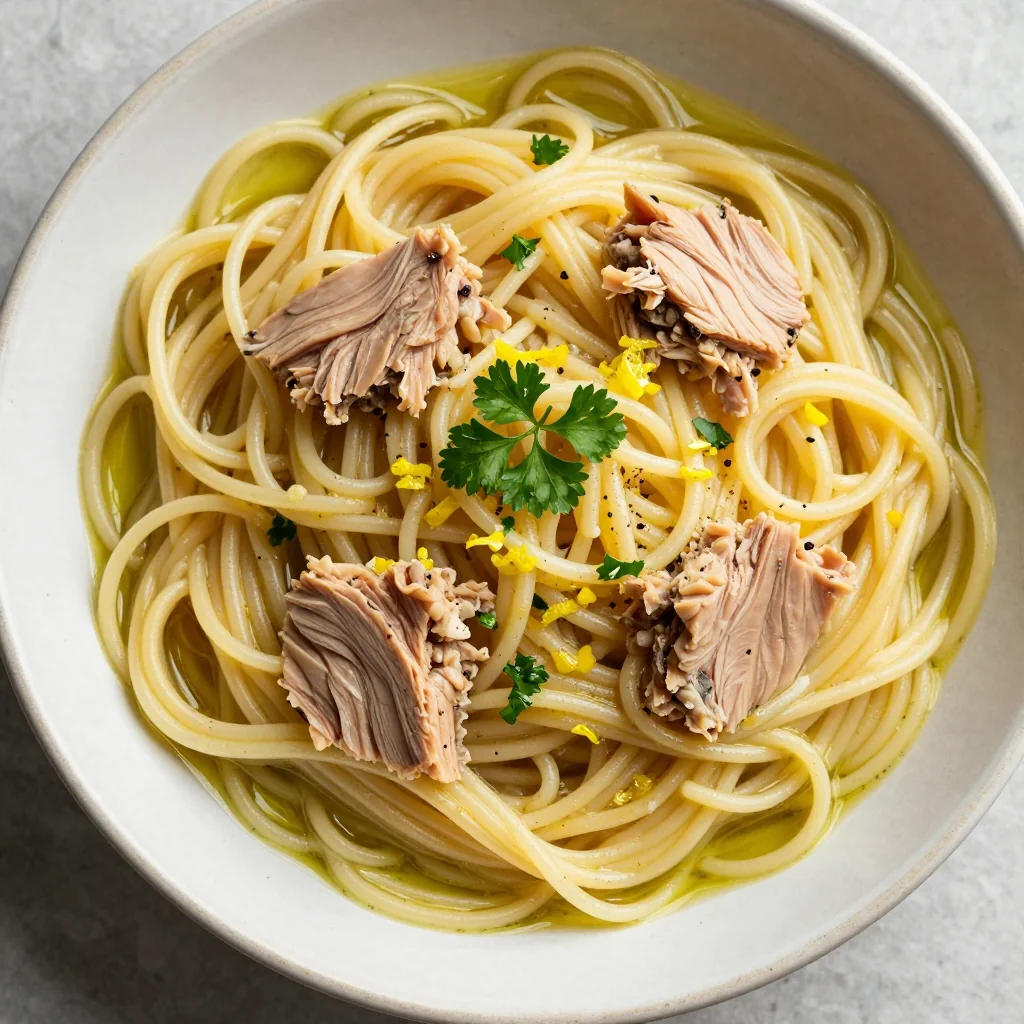
Love this? Pin it for later! 📌
What makes this dish so special is its ability to taste far more sophisticated than its humble ingredients suggest. Canned tuna, often relegated to sad desk lunches, is transformed into something luxurious when paired with golden garlic, a whisper of red-pepper heat, and the bright kiss of lemon zest. The whole thing comes together in the time it takes to boil spaghetti, making it the ultimate weeknight hero. Whether you're feeding last-minute guests, feeding yourself after a long day, or simply craving something comforting yet vibrant, this pantry pasta delivers every single time.
Why This Recipe Works
- Lightning-Fast: From pantry to plate in 20 minutes flat—perfect for those "I forgot to plan dinner" nights.
- Pantry-Powered: Every ingredient is shelf-stable, so you can always keep them on standby.
- Bright & Fresh: Lemon zest and juice lift the rich tuna and olive oil, tasting like spring regardless of the season.
- Protein-Packed: One can of tuna adds 20 g of satisfying protein without any extra effort.
- One-Pot Wonder: The sauce is built right in the pasta pot, so cleanup is minimal.
- Endlessly Adaptable: Swap citrus, herbs, or pasta shapes based on what you have on hand.
Ingredients You'll Need
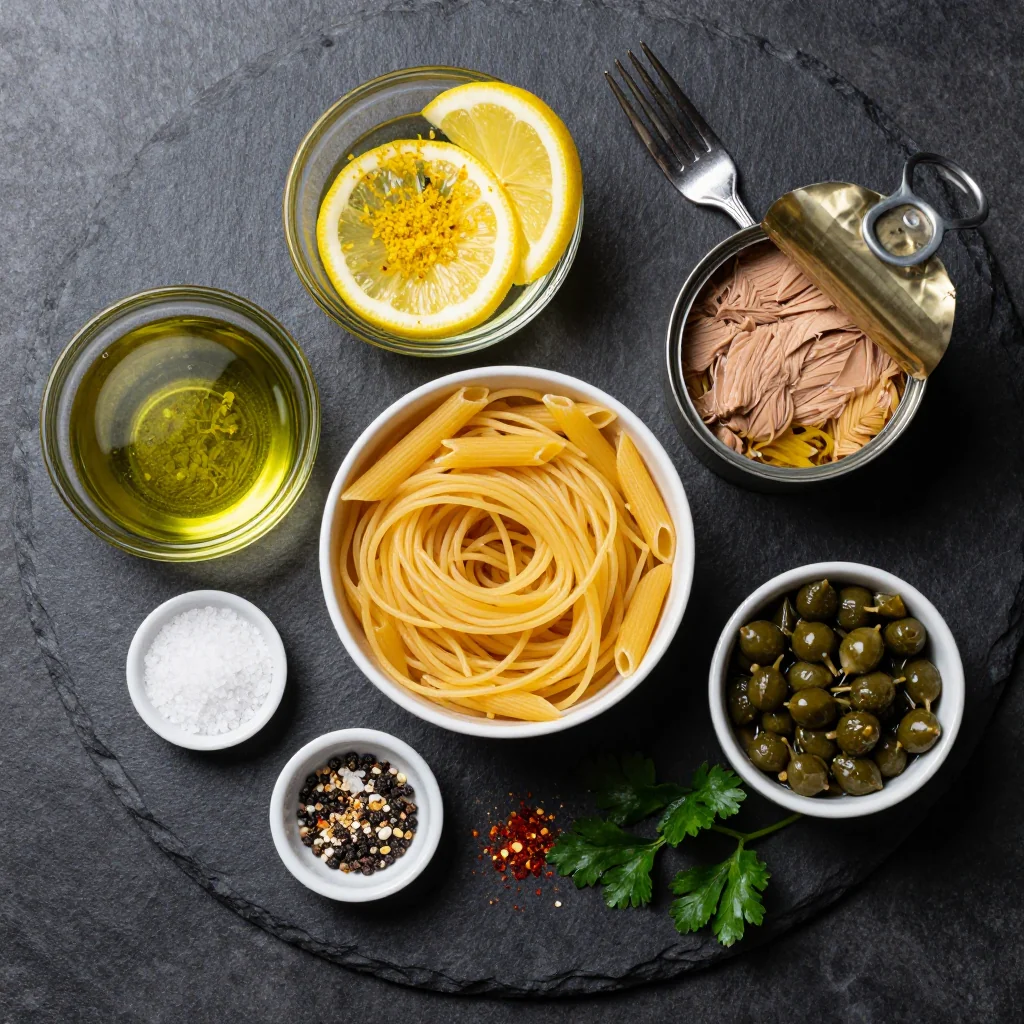
Great meals start with great ingredients—even when those ingredients come from a can or a box. Here's what to look for (and why it matters) for each component of this pantry pasta.
Pasta
I reach for spaghetti or linguine because their long strands catch the olive-oil-based sauce beautifully. If you only have short pasta on hand, go for it—orecchiette or shells cup the tuna and lemon bits like tiny edible bowls. Use bronze-cut pasta if possible; the rough surface grips flavor better than Teflon-cut. Whole-wheat or legume-based pastas add extra fiber and still taste fantastic here.
Canned Tuna
Buy tuna packed in olive oil, not water. The oil preserves the tuna's flavor and texture, and you'll use some of it in the sauce. Solid or chunk-light both work; solid gives you meaty slabs while chunk breaks down into every bite. If you only have water-packed, drain it well and add an extra glug of good olive oil to compensate. Look for pole-and-line or MSC-certified brands for sustainability.
Lemon
The zest holds the essential oils—more aroma than the juice—so don't skip it. Choose firm, heavy lemons with unblemished skin (thin-skinned ones zest easier). Before zesting, scrub under warm water to remove wax. If citrus isn't in season, swap in 1 tsp finely grated lime zest or ½ tsp orange zest for a different but still bright profile.
Garlic
Fresh cloves, smashed then minced, give a sweet, nutty backbone once gently sautéed. Jarred minced garlic works in a pinch, but use only two-thirds the amount—it's stronger. For a mellower flavor, slice the garlic into thin coins so it softens rather than browns.
Red-Pepper Flakes
Just a pinch wakes everything up. If you're sensitive to heat, start with ⅛ tsp; for thrill-seekers, go up to ½ tsp or add a tiny diced Calabrian chile.
Parsley
Flat-leaf (Italian) parsley is more flavorful than curly. Dry parsley is better than none—use 1 tsp—but fresh really makes the dish sing. In summer, basil or mint are delicious alternatives.
Parmesan (optional)
Traditionalists say no cheese with seafood pasta, but a light snowfall of Parmigiano-Reggiano melts into the olive oil and adds umami. Omit for a dairy-free plate, or swap in 1 Tbsp nutritional yeast for a similar depth.
How to Make Pantry Pasta With Canned Tuna And Lemon Zest For A Quick And Bright Weeknight Meal
Bring a large pot of well-salted water to a rolling boil (1 Tbsp kosher salt per quart). Add 12 oz pasta and cook 1 minute less than package directions for al dente. Stir occasionally to prevent sticking. Before draining, ladle 1 cup starchy pasta water into a heat-proof bowl; you'll use this liquid gold to emulsify the sauce.
While pasta cooks, heat 3 Tbsp oil from the tuna can (or regular olive oil) in a wide skillet over medium-low. Add 3 minced garlic cloves and ¼ tsp red-pepper flakes; cook 60–90 seconds until fragrant and just beginning to turn golden. Reduce heat if garlic threatens to brown—bitter garlic ruins the sauce.
Add two 5-oz cans of olive-oil-packed tuna (do not drain completely) to the skillet. Break the fillets into hearty chunks with a wooden spoon; you want a mix of shards and bigger pieces. Let sizzle 30 seconds so the edges pick up garlicky oil.
Pour in ½ cup reserved pasta water; simmer 1 minute. The water will look cloudy—that's the starch working its magic. Swirl the pan to encourage oil and water to dance together into a glossy sauce.
Taste and adjust salt (some canned tuna is salty) and pepper. Plate immediately; garnish with extra parsley and optional Parmesan. Offer lemon wedges at the table for extra brightness.
Expert Tips
Save That Oil
The oil clinging to the tuna is flavored with fish and salt—liquid umami. Use it to sauté the garlic, then supplement with regular olive oil if you need more fat.
Low & Slow Garlic
Cooking garlic over gentle heat releases sweetness; high heat turns it acrid. If you accidentally brown it, start over—there's no fixing bitter.
Starchy Water Magic
The dissolved starch emulsifies oil into a creamy sauce without cream. If you forget to save it, whisk ½ tsp flour into ½ cup hot water as a stand-in.
Zest Before Juice
Zesting a whole lemon is easier than trying to zest one that's already been halved and juiced. Microplane zest first, then slice and squeeze.
Quality Canned Fish
Make It a Meal Prep
Cook pasta 90 seconds shy of al dente, toss with half the sauce, and refrigerate. At serving, reheat with a splash of water and finish with remaining sauce.
Variations to Try
- 1
Puttanesca Twist: Add 2 Tbsp chopped olives and 1 Tbsp capers with the garlic; finish with cherry tomatoes blistered in the skillet.
- 2
Creamy Version: Stir 2 Tbsp cream cheese or mascarpone into the emulsion for a silky, tuna-noodle vibe kids love.
- 3
Herb Swap: Use dill or tarragon for a French feel, or oregano and basil for Italian grandma energy.
- 4
Vegetable Boost: Toss in a handful of baby spinach, frozen peas, or diced zucchini during the last 2 minutes of pasta boiling.
- 5
Gluten-Free: Use chickpea or rice pasta; save the starchy water as usual—GF pastas often release even more starch.
- 6
Spicy Calabrian: Replace red-pepper flakes with 1 finely minced Calabrian chile plus ½ tsp of its oil for smoky heat.
Storage Tips
Refrigerate: Cool leftovers within 2 hours and store in an airtight container up to 3 days. The lemon may dull slightly, so brighten with an extra squeeze when reheating.
Reheat: Warm gently in a skillet over medium-low with a splash of water or broth, tossing until just hot. Microwaving works but can toughen tuna; if you must, cover and heat at 70 % power in 30-second bursts.
Freeze: Oil-based sauces can separate, so freezing isn't ideal. In a pinch, freeze up to 1 month; thaw overnight in the fridge and reheat with pasta water while stirring vigorously to re-emulsify.
Make-Ahead Components: Zest and juice the lemon, chop parsley, and mince garlic in the morning; store separately in the fridge. Dinner then takes only as long as boiling pasta.
Frequently Asked Questions
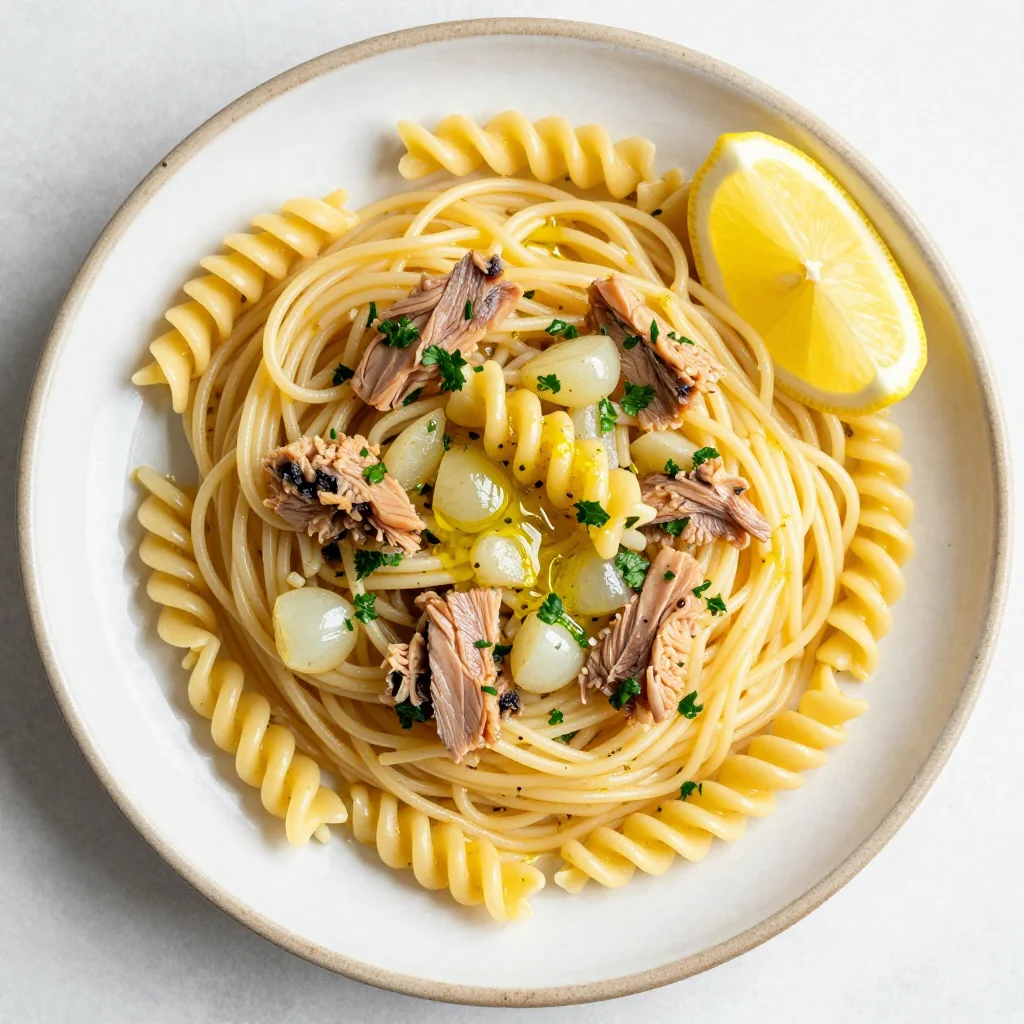
Pantry Pasta With Canned Tuna And Lemon Zest For A Quick And Bright Weeknight Meal
Ingredients
Instructions
- Cook pasta: Boil in well-salted water until 1 minute shy of al dente. Reserve 1 cup pasta water, then drain.
- Sauté aromatics: In a large skillet, heat 3 Tbsp oil from the tuna can over medium-low. Add garlic and red-pepper flakes; cook 60–90 sec until fragrant.
- Add tuna: Flake in tuna plus remaining oil from cans. Sizzle 30 sec to infuse flavors.
- Emulsify: Pour in ½ cup pasta water; simmer 1 min until slightly thickened.
- Toss: Add drained pasta; toss vigorously, adding more water as needed for a glossy sauce.
- Finish: Off heat, stir in lemon zest, juice, parsley, and 2 Tbsp olive oil. Season and serve hot.
Recipe Notes
For extra richness, add 1 tsp butter along with the final olive oil. Leftovers keep 3 days refrigerated; reheat gently with a splash of water.