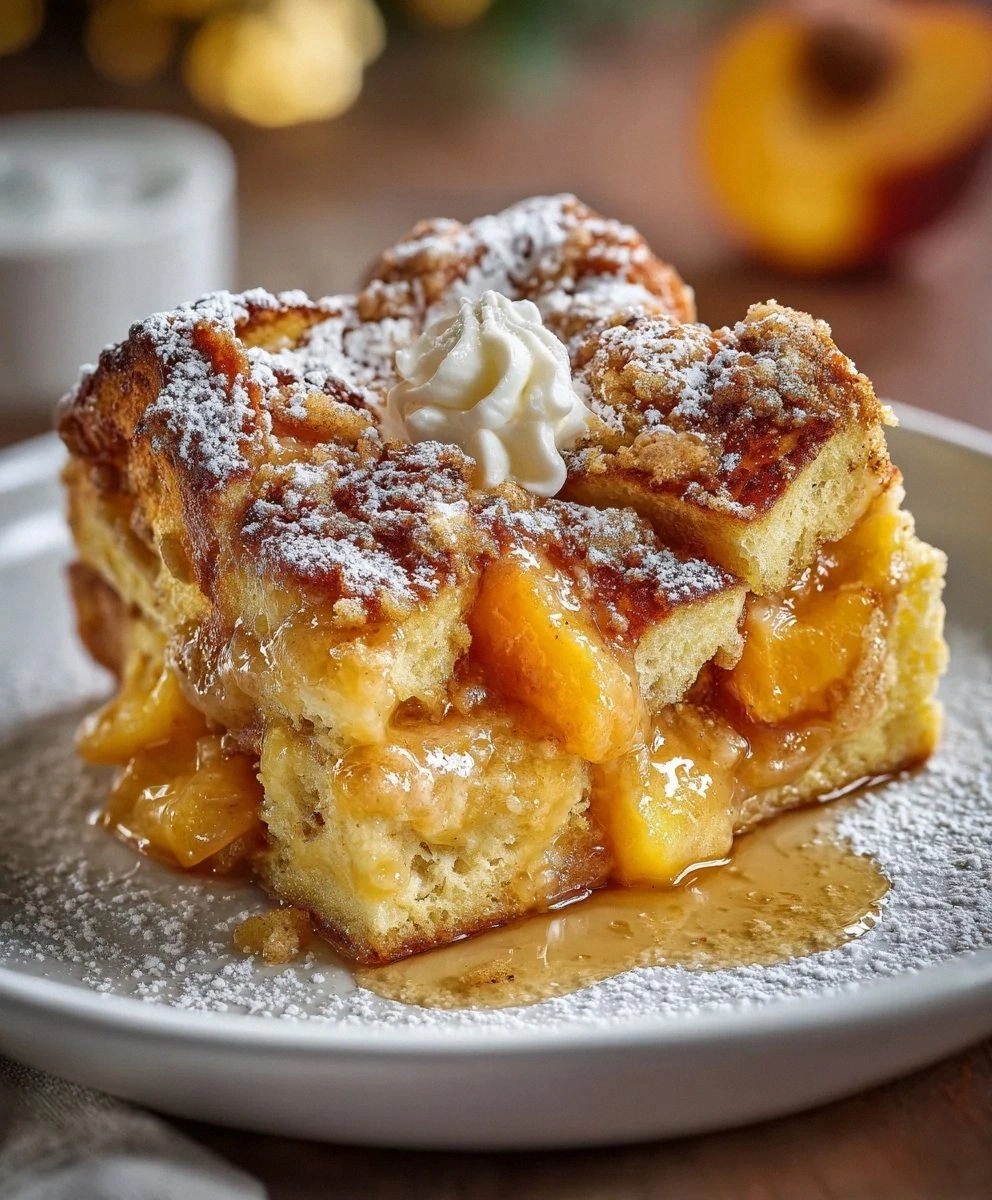
I still remember the morning I accidentally created what would become the most requested dish in my kitchen — and it all started with a catastrophic coffee spill on my laptop and a desperate attempt to salvage breakfast for six hangry friends. The original plan was simple: peach cobbler for dessert, French toast for breakfast. But when my laptop died mid-recision and I had to wing it from memory, something magical happened. The sweet, jammy peaches melded with the custardy bread in a way that made everyone stop mid-chew and stare at each other with wide eyes. That first bite? Pure sunshine wrapped in a warm hug, with crispy edges that shattered like autumn leaves and a center so luxuriously soft it felt like eating a cloud.
Picture this: It's 7 AM on a Sunday, your kitchen smells like a Georgia peach orchard collided with a French bakery, and you're pulling out a casserole dish that's bubbling with golden perfection. The aroma hits you first — vanilla and cinnamon dancing with caramelized peaches, buttery brioche soaking up every drop of custard like it's been waiting its whole life for this moment. Your neighbors will knock. Your family will hover. And you'll find yourself making excuses to walk past the pan just to steal another forkful of those crispy edges that taste like someone turned peach cobbler into breakfast magic.
Most recipes get this completely wrong by treating it like regular French toast with some peaches tossed in — lazy and disappointing. They forget that we're building layers of flavor here, creating a custard that penetrates every air pocket in the bread, developing a peach filling that thickens just enough to stay put, and engineering a crumble topping that stays crispy even after the first cut. This version? This is the one that'll ruin all other breakfast bakes for you forever. The one that'll have people texting you months later, still dreaming about that morning.
Okay, ready for the game-changer? We're not just soaking bread here — we're creating a custard so rich it could make a grown baker weep, cooking down peaches with brown sugar until they turn into jammy perfection, and topping it all with a buttery crumble that tastes like someone turned peach cobbler into breakfast form. Let me walk you through every single step — by the end, you'll wonder how you ever made it any other way.
What Makes This Version Stand Out
Restaurant-Quality Custard: Most home bakers stop at eggs and milk, but we're going full luxury with a blend of whole milk and heavy cream that creates a custard so silky it could make a French pastry chef jealous. The ratio is crucial here — too much cream and it becomes heavy, too little and it won't set properly.
Triple-Texture Magic: Where other recipes give you soggy bread with mushy fruit, we've engineered three distinct textures that work together like a breakfast symphony. The bottom layer stays custardy and soft, the middle becomes pudding-like from the peach juices, and the top develops a crispy, caramelized crust that'll have you fighting over corner pieces.
Make-Ahead Champion: Here's where this recipe becomes your new best friend for brunch parties. Assemble it the night before, let it rest in the fridge, and slide it into the oven while you're making coffee. The overnight rest actually improves the texture as the bread fully absorbs the custard and the flavors meld into something transcendent.
Seasonal Flexibility: Fresh peaches in summer taste like sunshine captured in dessert form, but frozen peaches work so well that you'll be making this year-round. The recipe adapts to whatever fruit you have — I've made it with berries, apples, even pears, and each version has its own personality while maintaining that essential cobbler-French-toast hybrid magic.
Crowd Psychology: I've served this to picky toddlers, sophisticated food snobs, and everyone in between. The combination of familiar breakfast flavors with dessert-level indulgence hits something primal in people. They'll start with polite portions, then go back for seconds, thirds, and eventually just stand by the pan with a fork.
Ingredient Quality Matters: Using real vanilla extract instead of imitation, fresh nutmeg instead of pre-ground, and good brioche instead of regular bread isn't just food snobbery — it's the difference between good and mind-blowing. Each quality ingredient adds layers of flavor that build into something greater than their sum.
Alright, let's break down exactly what goes into this masterpiece...
Inside the Ingredient List
The Flavor Base
Brioche or challah isn't just a suggestion here — it's the foundation that makes or breaks this entire operation. These enriched breads come pre-loaded with butter and eggs, creating a luxurious texture that regular sandwich bread could never achieve. The eggy richness means they soak up custard like a sponge without falling apart, and the slight sweetness plays beautifully with the peaches. Skip this and use regular bread? You'll end up with a sad, soggy mess that tastes like disappointment with a hint of cinnamon.
Whole milk and heavy cream work as a team here, creating a custard that's rich enough to feel indulgent but not so heavy that you need a nap after breakfast. The milk provides structure while the cream adds that silky mouthfeel that makes people close their eyes when they take a bite. If you're dairy-free, I've had success with full-fat coconut milk, though it adds a tropical note that changes the character completely.
Vanilla extract might seem basic, but using the real stuff instead of imitation is like the difference between a live orchestra and a MIDI file. Real vanilla has hundreds of flavor compounds that create depth and warmth, while imitation gives you a one-note sweetness that screams "cheap dessert." Spend the extra money here — your taste buds will thank you every single time.
The Texture Crew
Eggs are the unsung heroes of this operation, providing the protein network that transforms liquid custard into sliceable perfection. Too few eggs and your bake will be a soupy mess; too many and it becomes rubbery and dense. The ratio I've perfected gives you clean slices that hold their shape while staying luxuriously creamy in the center. Room temperature eggs incorporate more smoothly, so pull them out early or give them a quick warm water bath.
Ground cinnamon and nutmeg aren't just there for flavor — they actually affect how we perceive sweetness and warmth in the dish. Cinnamon adds that cozy bakery note that makes people feel at home, while nutmeg provides a subtle complexity that keeps the peaches from becoming one-dimensional. Fresh nutmeg, grated with a microplane, contains volatile oils that disappear within hours of grinding. Once you've tasted the difference, you'll never go back to the pre-ground stuff.
Salt isn't just for savory dishes — it's the flavor amplifier that makes every other ingredient taste more like itself. A pinch here doesn't make the dish salty; it makes the peaches taste peachier, the vanilla more vanilla-y, and the overall flavor more complex and balanced. It's the difference between a good dessert and a great one.
The Unexpected Star
Fresh peaches, when they're in season, are like nature's candy — juicy, fragrant, and sweet enough to make you wonder why we ever add sugar to anything. But here's the thing: frozen peaches often work better in baking because they're picked at peak ripeness and flash-frozen, while "fresh" peaches in grocery stores are often picked green and never develop their full flavor. If you're using fresh, make sure they actually smell like peaches and give slightly to pressure.
The cornstarch might seem like an odd addition, but it's the insurance policy that keeps your peach layer from turning into peach soup. As the peaches release their juices during baking, the cornstarch activates and thickens everything into a jammy consistency that stays put when you slice the bake. Without it, you'll have a watery mess that pools on the plate and makes the bottom layer soggy.
Lemon juice isn't just for brightness — the acid actually helps the peaches maintain their structure during cooking, preventing them from turning into mush. It also balances the sweetness, creating a more sophisticated flavor profile that doesn't hit you over the head with sugar. Fresh lemon juice has enzymes that bottled juice lacks, so squeeze a real lemon if you can.
The Final Flourish
The crumble topping is where we separate the amateurs from the pros. Cold butter is non-negotiable here — warm butter melts too quickly and creates a greasy mess instead of those perfect nubbly bits that stay crisp even after baking. I keep my butter in the freezer and grate it with a box grater for the ultimate in cold, incorporated perfection.
Brown sugar in the crumble adds caramel notes and a deeper flavor than white sugar alone. The molasses in brown sugar also helps create those irresistible crispy edges that'll have you picking at the pan long after you're full. Dark brown sugar has more molasses and creates a more intense flavor, while light brown sugar gives you subtlety.
Everything's prepped? Good. Let's get into the real action...
The Method — Step by Step
- Start by cutting your brioche or challah into 1-inch cubes — not too small or they'll disintegrate, not too large or they won't absorb the custard properly. Spread them on a baking sheet and let them sit out for about 30 minutes while you prep everything else. This isn't just busy work — slightly stale bread absorbs custard better without falling apart, creating that perfect texture contrast between the creamy interior and the crispy top. If you're short on time, you can speed this up by putting the bread in a 200°F oven for 10 minutes, but don't let it brown — we're just trying to dry it out slightly.
- Now for the custard: whisk together your eggs, milk, cream, sugar, vanilla, cinnamon, nutmeg, and salt until the mixture is completely smooth with no streaks of egg white remaining. This is where most people rush and end up with custard that has white streaks of unincorporated egg — take your time here. The mixture should be a uniform pale yellow and smell like melted vanilla ice cream. If you've got time, let this rest for 15 minutes so the spices can bloom and the sugar can fully dissolve.
- While the custard rests, make your peach filling by combining the peach slices, brown sugar, cornstarch, and lemon juice in a bowl. The cornstarch will disappear into the peach juices, creating an invisible thickening agent that'll activate during baking. Toss everything gently — you want the peaches coated but not mashed. Let this sit for 10 minutes while the natural juices start to release and create that syrupy base that'll make your kitchen smell like a peach orchard.
- Butter your baking dish generously — every surface should be slicked with butter to prevent sticking and add flavor. I'm talking about a 9x13 inch dish here, and don't be shy with the butter. Those buttery edges are where the magic happens, creating golden, crispy bits that taste like someone turned peach cobbler into a breakfast food. Tilt the dish to coat every corner and edge.
- Time to assemble: arrange half of the bread cubes in the buttered dish, creating a slightly uneven surface with some pieces standing up — these will become your crispy peaks. Pour half of the peach mixture over the bread, making sure to distribute the peaches evenly but leaving some pockets of just bread for textural contrast. The peaches should nestle between the cubes, not just sit on top like an afterthought.
- Add the remaining bread cubes in a second layer, then pour the rest of the peaches over the top. Now here's the crucial part: slowly pour the custard over everything, starting at the edges and working your way to the center. The custard should seep down through all the layers, coating every piece of bread. Press down gently with a spatula to help the absorption, but don't smash everything flat — you want to maintain some air pockets.
- Cover the dish with plastic wrap and let it rest at room temperature for at least 30 minutes, or refrigerate overnight if you're planning ahead. This resting period is non-negotiable — it's when the bread fully absorbs the custard and the flavors start to meld. If you're doing the overnight method, let it come to room temperature for 30 minutes before baking. This isn't just food safety — cold bread takes longer to cook through and can lead to burnt edges with a raw center.
- While the bake rests, make your crumble topping by combining flour, brown sugar, and cold butter cubes. Use a pastry cutter or your fingers to work the butter into the flour until you have pea-sized pieces. The mixture should hold together when squeezed but break apart easily — think of the texture of wet sand that's been sitting in the sun. If the butter gets too warm and starts to melt, pop the whole bowl in the freezer for 10 minutes.
- Preheat your oven to 350°F — not 325°F, not 375°F, but exactly 350°F. This temperature is the sweet spot where the custard sets properly without the edges burning. If your oven runs hot (and many do), use an oven thermometer to check. There's nothing worse than a beautiful breakfast bake with raw custard in the center and burnt edges.
- Just before baking, sprinkle the crumble topping evenly over the soaked bread. Don't press it down — you want it to stay loose so it can crisp up and create those perfect textural contrasts. The topping should cover the surface but still allow some peaches to peek through — they're going to bubble up and create jammy pockets that'll make you weak in the knees.
- Bake for 45-55 minutes, until the top is golden brown and the custard is set but still slightly jiggly in the center. The crumble should be crisp and the peaches should be bubbling up around the edges. If the top starts to brown too quickly (before the custard is set), tent it with foil for the remaining baking time. The center should register 170°F on an instant-read thermometer — this ensures the eggs are cooked but not overcooked into rubber.
That's it — you did it. But hold on, I've got a few more tricks that'll take this to another level...
Insider Tricks for Flawless Results
The Temperature Rule Nobody Follows
Room temperature ingredients aren't just a chef's preference — they're the difference between smooth custard and scrambled egg French toast. When cold eggs hit warm milk, they can seize up and create tiny curds that ruin the texture. Pull your eggs, milk, and cream out of the fridge 30 minutes before you start, or give them a gentle warm water bath for 10 minutes. This simple step ensures everything incorporates smoothly and your custard stays silky instead of lumpy.
Why Your Nose Knows Best
Don't rely on time alone — your nose is actually the best timer for this recipe. When the peaches start to caramelize and the sugars in the crumble begin to brown, your kitchen will fill with the most intoxicating aroma. That's your cue to start checking for doneness. The smell of perfectly baked Peach Cobbler French Toast Bake is a combination of vanilla, caramel, and summer peaches that'll have neighbors knocking on your door. If you're not getting that incredible smell by the 40-minute mark, your oven might be running cool.
The 5-Minute Rest That Changes Everything
I know it's torture to wait when your kitchen smells like a dream, but those five extra minutes of resting time are crucial. During this rest, the custard finishes setting, the juices redistribute, and the whole thing becomes sliceable instead of spoonable. Plus, the temperature drops just enough that you won't burn your mouth on molten peach lava. A friend tried serving immediately once — let's just say it looked more like peach soup with bread chunks than the elegant breakfast bake we were going for.
The Salt Secret
Don't skip the salt in the custard — it's not there to make things salty, it's there to make everything taste more like itself. Salt enhances the vanilla, deepens the peach flavor, and balances the sweetness so the whole dish tastes more sophisticated and less like dessert for breakfast. Just a pinch makes the difference between a good bake and a great one. I've had people try it with and without, and they can't identify what's different, but they always prefer the salted version.
The Crumble Insurance Policy
Make extra crumble topping and freeze it in a zip-top bag. Having this ready means you can transform regular French toast, muffins, or even yogurt parfaits into something special in seconds. The butter in the crumble keeps indefinitely in the freezer, and you'll thank yourself when you're staring at plain yogurt wondering how to make breakfast exciting. Plus, if your crumble topping starts to get too brown during baking, you can always add a layer of foil, but you can't add more crumble mid-bake.
Creative Twists and Variations
This recipe is a playground. Here are some of my favorite ways to switch things up:
Berry Blast-Off
Swap the peaches for a mix of blueberries, raspberries, and blackberries, and add a teaspoon of lemon zest to the custard for a bright, tangy version that tastes like summer in a pan. The berries create beautiful purple swirls as they burst during baking, and the tartness balances the rich custard perfectly. Reduce the sugar slightly since berries aren't as sweet as peaches, and add a handful of fresh berries on top right before serving for a pop of color.
Apple Pie Mode
Fall means apples, and this variation tastes like someone turned apple pie into breakfast. Use firm apples like Honeycrisp or Granny Smith, add a teaspoon of apple pie spice to the custard, and include a handful of chopped pecans in the crumble topping. The apples hold their shape better than peaches, creating distinct pockets of fruit throughout the bake. A drizzle of caramel sauce on top takes it completely over the top.
Tropical Escape
For a taste of the islands, use fresh or canned (well-drained) pineapple chunks and add shredded coconut to the crumble topping. Swap the vanilla extract for coconut extract, and include a splash of rum in the custard for an adults-only version that tastes like a beach vacation. The tropical fruits have more acid than peaches, so add an extra tablespoon of brown sugar to balance.
Chocolate Decadence
Add a cup of dark chocolate chips to the bread cubes before soaking — they'll melt during baking and create pockets of chocolate throughout. Use half the amount of peaches and add raspberries for a chocolate-raspberry breakfast that tastes like dessert. The chocolate adds richness that pairs beautifully with the custard, but go easy — too much and it becomes overwhelming.
Savory-Sweet Surprise
This one's for the adventurous: add crispy bacon pieces between the bread layers and swap half the sugar for maple syrup. The salty-sweet combination is addictive, and the bacon fat adds incredible flavor to the custard. Use slightly less fruit and add an extra egg to balance the additional fat. It sounds weird until you try it — then you'll understand why this became my most-requested brunch dish.
Gluten-Free Glory
Use gluten-free bread (stale works best) and swap the flour in the crumble for almond flour. The almond flour adds a nutty flavor that complements the fruit beautifully, and you won't miss the gluten at all. Make sure your cornstarch is certified gluten-free, and you're good to go. The texture is slightly different but equally delicious.
Storing and Bringing It Back to Life
Fridge Storage
Leftovers (if you have any) will keep in an airtight container in the refrigerator for up to 4 days. The key is to cool it completely before storing — warm bread creates condensation that makes everything soggy. Cut it into individual portions and wrap each piece in plastic wrap before putting them in a container. This way, you can grab single servings without exposing the whole pan to air every time you want a piece.
Freezer Friendly
This bake freezes beautifully, making it perfect for meal prep or saving some for a rainy day. Cut it into individual portions, wrap each piece tightly in plastic wrap, then aluminum foil, and freeze for up to 2 months. To reheat, unwrap and microwave for 1-2 minutes, or bake from frozen at 300°F for 15-20 minutes. The crumble won't be quite as crispy after freezing, but the flavor is still incredible. Pro tip: freeze the crumble topping separately and add it fresh when reheating for maximum crunch.
Best Reheating Method
The oven is your friend here — microwaving works in a pinch but makes the bread rubbery. For the best texture, reheat in a 300°F oven for 10-12 minutes, adding a tiny splash of water to the pan first. The water creates steam that helps restore the creamy texture without drying it out. If you're in a hurry, the microwave works, but cover with a damp paper towel and heat in 30-second bursts to prevent rubbery bread. A toaster oven gives you the best of both worlds: quick reheating with crispy edges.