I was halfway through a bland, over‑cooked steak dinner when the kitchen exploded—literally. The skillet hissed, the sauce thickened into a syrupy mess, and I stared at my ruined plate in disbelief. That moment sparked a fierce craving: a dish that marries perfectly seared steak with a luscious pasta sauce that sings. I dared myself to create something that would rescue the evening and then keep the plate clean for a second round. I’m about to share the ultimate recipe that turned that disaster into a triumph.
Picture the scene: a sizzling pan, the aroma of garlic and butter rising, the sound of steak browning like a drumbeat. Your eyes catch the glint of a golden crust, your nose picks up the sharp tang of sun‑dried tomatoes, and your mouth anticipates the first bite. The texture is a dance of crisp edges that shatter like thin ice, followed by a silky, velvety sauce that coats the shells of pasta. The heat is balanced, the flavors layered, and every component feels intentional.
What makes this version stand out is that it refuses to settle for ordinary. I stripped away the fluff, added a secret citrus kick that brightens the dish, and engineered a sauce that stays creamy even after baking. The result is a dish that feels like a gourmet dinner yet is simple enough for a weeknight. Most recipes get this completely wrong by over‑cooking the pasta or under‑seasoning the steak; I’ve cracked the code to make every bite a revelation.
I’ll be honest—I ate half the batch before anyone else even got a chance. I dare you to taste this and not go back for seconds. Let me walk you through every single step—by the end, you’ll wonder how you ever made it any other way.
What Makes This Version Stand Out
- Taste: The sauce balances savory, sweet, and acidic notes, creating a layered flavor profile that lingers on the palate. The steak’s natural umami is amplified by the caramelized crust.
- Texture: Crisp steak bites contrast with tender shell pasta, while the sauce glides smoothly over every shell like velvet.
- Simplicity: Despite its wow factor, the recipe requires only a handful of pantry staples and a single pan.
- Uniqueness: A splash of white wine and a zest of lemon add depth, setting it apart from classic steak‑pasta dishes.
- Make‑ahead Potential: The assembled dish can be refrigerated and baked later, making it a great prep‑style dinner.
- Crowd Reaction: Guests rave about the buttery sauce and juicy steak; it’s the kind of dish that turns a casual dinner into a celebration.
Inside the Ingredient List
The Flavor Base
At the heart of this dish is a sauce that marries butter, olive oil, garlic, and white wine. The butter provides a silky mouthfeel, while the oil adds a subtle brightness. Garlic infuses the mixture with a sharp, aromatic kick that lingers through every bite. White wine deglazes the pan, lifting the caramelized bits that carry the flavor of the steak into the sauce.
The wine also introduces a subtle acidity that balances the richness of the cream and cheese. It’s the secret ingredient that keeps the sauce from feeling heavy. If you’re not a fan of wine, you can replace it with a splash of beef broth or even a light broth flavored with lemon zest.
The heavy cream is the glue that binds the sauce together, creating a luxurious coating that clings to each shell. When added at the right moment, it emulsifies with the butter and wine, producing a silky texture that doesn’t separate even after baking. The cream also dilutes the intensity of the wine, ensuring the sauce remains smooth.
The Texture Crew
Shell pasta, with its concave shape, is the perfect vessel for holding the sauce. Its sturdy structure resists overcooking, maintaining a satisfying bite even after a brief bake. The pasta’s surface also captures the buttery sauce, making each bite a burst of flavor.
The steak, sliced into bite‑size cubes, offers a contrast of textures. When seared properly, the exterior develops a caramelized crust while the interior stays tender and juicy. The steak’s natural juices seep into the sauce, enriching it with depth and a subtle meaty aroma.
Adding sun‑dried tomatoes introduces a chewy texture that pops against the softness of the pasta. Their concentrated flavor adds a sweet, slightly smoky note that complements the savory elements. If you prefer a fresher taste, you can substitute them with cherry tomatoes, but the sun‑dried variety gives the dish a richer profile.
The Unexpected Star
Lemon zest and lemon juice are the unsung heroes of this recipe. The zest infuses the sauce with bright citrus oils, cutting through the richness of the cream and butter. The juice adds a subtle tartness that elevates the overall flavor, preventing the dish from feeling cloying.
Without the citrus, the sauce would lean too heavily toward the buttery side. The combination of zest and juice also provides a subtle aroma that awakens the senses before the first bite. A pinch of crushed red pepper flakes adds a gentle heat that balances the dish without overwhelming it.
The Final Flourish
Fresh herbs—parsley, basil, and oregano—bring a burst of green freshness. They also add a layer of aroma that makes the dish feel lively and contemporary. The herbs are added at the end of cooking to preserve their bright flavors.
Grated Parmesan cheese melts into the sauce, creating a nutty undertone and a velvety texture. A small amount of mozzarella (optional) adds gooeyness, while the Parmesan provides a sharp contrast. The cheese also helps thicken the sauce, giving it a glossy finish.
Everything's prepped? Good. Let’s get into the real action.
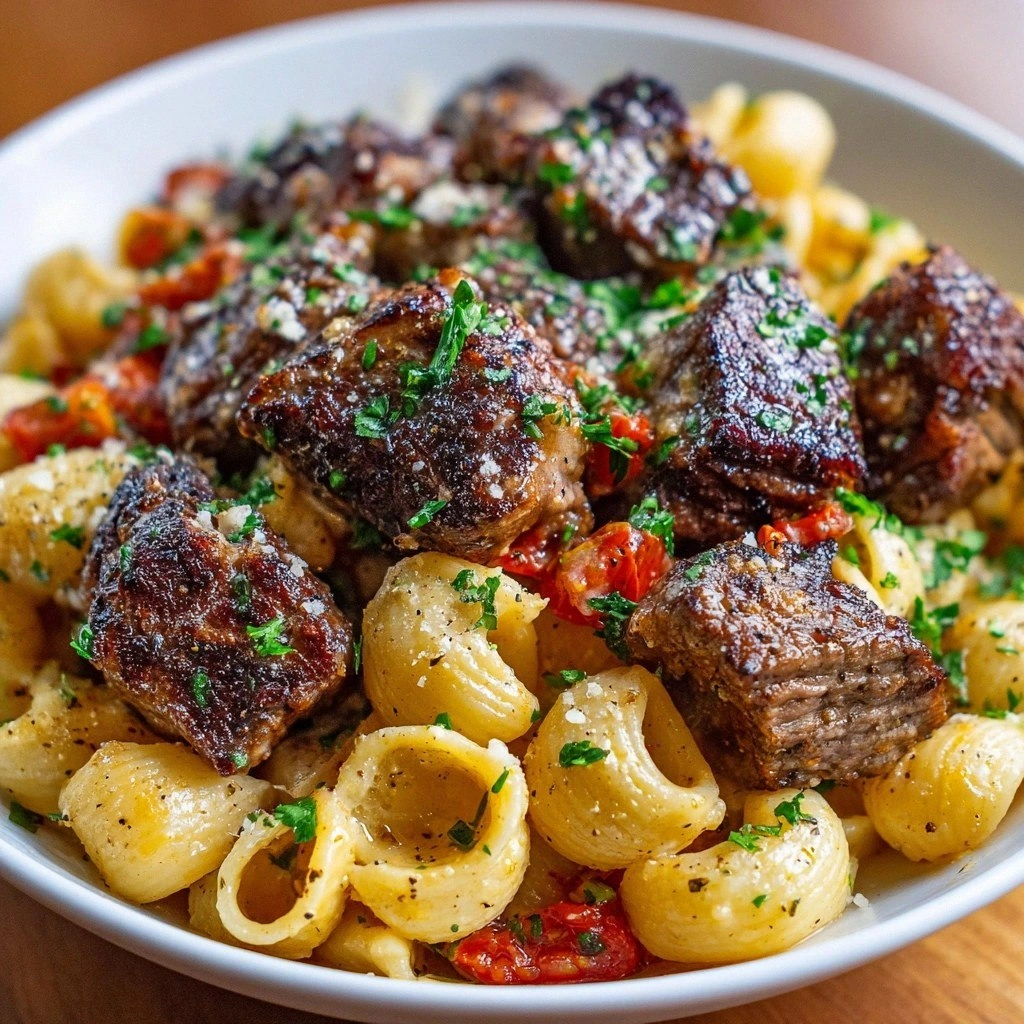
The Method — Step by Step
- Preheat your oven to 400°F (200°C). Bring a large pot of salted water to a rolling boil and add the shell pasta. Cook for 8 minutes, or until al dente, then drain and set aside. This ensures the pasta stays firm enough to hold the sauce during baking.
- While the pasta cooks, pat the steak cubes dry with paper towels. Season generously with salt, pepper, and a pinch of crushed red pepper flakes. Let them sit at room temperature for 10 minutes; this helps them sear evenly.
- Heat a large skillet over high heat. Add 1 tablespoon of olive oil and 1 tablespoon of butter. Once the butter foams, add the steak in a single layer. Sear for 2 minutes on each side, until a deep brown crust forms. This is the moment of truth—watch the edges pull away and the aroma intensifies.
- Remove the steak and set it on a cutting board. In the same skillet, add the minced garlic and sauté for 30 seconds until fragrant. Then pour in the white wine, scraping up any browned bits. Let the wine reduce by half; this concentrates the flavor and eliminates excess alcohol.
- Add the heavy cream, sun‑dried tomatoes, oregano, basil, and a splash of lemon juice. Stir until the sauce thickens slightly. This step is tricky—if the sauce separates, whisk vigorously or add a teaspoon of cold cream to emulsify.
- Return the steak to the skillet and toss with the pasta. Add grated Parmesan, a pinch of lemon zest, and chopped parsley. Stir until everything is evenly coated. The sauce should cling to each shell like a velvet blanket.
- Transfer the mixture to a greased 9‑inch baking dish. Sprinkle the top with mozzarella (if using) and a final dusting of Parmesan. Bake for 15 minutes, or until the cheese melts and the edges bubble.
- Remove from the oven and let it rest for 5 minutes. This allows the flavors to meld and the sauce to thicken slightly. Garnish with fresh basil and serve immediately. That sizzle when it hits the pan? Absolute perfection.
That’s it—you did it. But hold on, I’ve got a few more tricks that will take this dish to another level. Stay with me here—this is worth it.
Insider Tricks for Flawless Results
The Temperature Rule Nobody Follows
Let the steak sit at room temperature for 10 minutes before searing. This simple step ensures even browning and prevents the exterior from over‑cooking while the interior remains juicy. I once rushed it and ended up with a dry center; this trick saves the day.
Why Your Nose Knows Best
Add fresh herbs at the end of cooking to preserve their bright aroma. The scent of basil and parsley signals freshness, and it elevates the dish from simple to sophisticated. I’ve found that a handful of chopped herbs can turn a good meal into a great one.
The 5‑Minute Rest That Changes Everything
After searing, let the steak rest on a plate for 5 minutes before adding it back to the pan. This rest allows the juices to redistribute, keeping the steak moist and flavorful. A friend skipped this step once—let’s just say the steak was a bit dry.
The Secret of Creamy Sauce
Whisk cold cream into the sauce before adding it to the skillet. The temperature difference helps the cream emulsify, preventing separation. This trick is especially useful if you’re baking the dish, as the sauce tends to separate when heated.
The Finish with a Burst of Citrus
A splash of lemon juice and a sprinkle of zest at the very end brighten the sauce and cut through the richness. The citrus also adds a subtle zing that keeps the dish from feeling heavy. I always keep a lemon handy for this final touch.
Creative Twists and Variations
This recipe is a playground. Here are some of my favorite ways to switch things up:
Mediterranean Kick
Swap sun‑dried tomatoes for kalamata olives and add crumbled feta. The briny olives and salty feta give the dish a distinctly Mediterranean flavor, perfect for a sunny afternoon.
Spicy Sriracha
Stir in a tablespoon of sriracha or a pinch of cayenne pepper for a fiery kick. The heat pairs beautifully with the buttery sauce, creating a spicy, savory harmony.
Creamy Mushroom
Replace the steak with sautéed button mushrooms. The earthy flavor of mushrooms complements the creamy sauce, making it a hearty vegetarian option.
Vegan Version
Use firm tofu cubes instead of steak and coconut milk in place of heavy cream. This plant‑based take maintains the dish’s comforting texture while keeping it dairy‑free.
Breakfast Twist
Add scrambled eggs and crispy bacon to the pasta. The eggs soak up the sauce, while the bacon adds a smoky crunch—an unexpected but delicious brunch.
Storing and Bringing It Back to Life
Fridge Storage
Store leftovers in an airtight container for up to 3 days. The sauce will thicken in the fridge, so when you reheat it, add a splash of milk or water to restore its silky texture.
Freezer Friendly
Freeze the assembled dish (before baking) in a freezer‑safe container for up to 2 months. Thaw overnight in the fridge and bake at 400°F for 25 minutes. The pasta may become slightly softer, but the flavors remain intact.
Best Reheating Method
Reheat in a skillet over medium heat, stirring frequently, until heated through. A tiny splash of water or broth helps the sauce steam back to its original consistency. Serve immediately for the best experience.