Picture this: I’m in my cramped kitchen, a rogue batch of masa harina has somehow turned my countertop into a sticky, floury mess, and a friend challenges me to whip up a crowd‑pleasing dish that will make them forget the disaster. I’m staring at a bag of flour that looks like it could be a future building material, and my stomach is growling louder than a bass drum in a mariachi band. The idea of turning a kitchen mishap into a culinary triumph is the kind of spark that makes a recipe feel like a secret weapon. I’ve tried my fair share of pupusas, but none of them have captured that buttery, smoky, cheese‑laden hug that I crave. The moment I tasted the first bite of this version, I knew I’d stumbled onto something special—so much so that I’m practically shouting from the kitchen that it’s the best version you’ll ever make at home.
The first thing that hits you is the aroma: a deep, caramelized scent of pork shoulder that’s been slow‑cooked until the fat has rendered into a glossy, fragrant glaze, mingling with the earthy cumin and oregano. The sound is a satisfying sizzle as the pupusas hit the hot skillet, the edges popping like tiny fireworks. The texture feels like a hug—soft, pliable dough that yields to the thumb, yet firm enough to hold the gooey, melty cheese and tender pork. The first bite is a burst of savory, smoky flavor, followed by a subtle kick of jalapeño that lingers, and a final whisper of lime that brightens the whole experience. If you’ve ever struggled with the perfect balance of salt and spice in a filling, you’ll feel an instant sense of relief.
What truly sets this version apart is the meticulous layering of textures and flavors. The masa dough is infused with a splash of warm water that makes it incredibly pliable, while the pork filling is studded with shredded mozzarella that melts into a creamy, silky core. The salsa roja, on the other hand, is a bright, fresh contrast—crushed tomatoes, fresh cilantro, and a hint of lime that cuts through the richness. Then there’s the crunchy cabbage slaw, which adds a refreshing bite that balances the heaviness of the meat and cheese. Every element is carefully calibrated so that each bite delivers a symphony of textures: soft, chewy, creamy, and crisp.
I dare you to taste this and not go back for seconds. The combination of smoky pork, melty cheese, and the zing of lime will make your taste buds do a happy dance. This is hands down the best version you'll ever make at home, and I’m not exaggerating—my friends have called it “the ultimate pupusa” and I’m still waiting for them to admit they’re not going to make it again. Picture yourself pulling this out of the oven, the whole kitchen smelling incredible, and the moment when you take a bite and feel the perfect harmony of flavors. That’s the moment that turns an ordinary dinner into a celebration.
If you’ve ever struggled with this, you’re not alone—and I’ve got the fix. Stay with me here, because I’m about to walk you through every single step—by the end, you’ll wonder how you ever made it any other way.
What Makes This Version Stand Out
- Taste: The pork shoulder is slow‑cooked to a melt‑in‑your‑mouth tenderness, then blended with cumin, oregano, smoked paprika, and a touch of chili powder that gives it depth without overpowering. The cheese blend of mozzarella and queso fresco creates a silky, creamy interior that balances the smoky meat. The salsa roja, made from ripe Roma tomatoes, fresh cilantro, and lime, cuts through the richness with bright acidity.
- Texture: The masa harina dough is hydrated just enough to be pliable yet sturdy, allowing the pupusas to hold their shape while the filling stays intact. The mozzarella melts into a luscious goo that oozes out when you cut into the pupusa, while the shredded pork remains juicy. The cabbage slaw adds a satisfying crunch that contrasts with the soft interior.
- Simplicity: With only a handful of core ingredients—masa, pork, cheese, and a few pantry staples—this recipe keeps the process straightforward. The steps flow naturally: dough, filling, assembly, and cooking. No fancy equipment or obscure techniques required.
- Uniqueness: The combination of mozzarella and queso fresco is a twist that elevates the traditional pupusa filling. The addition of a tangy cabbage slaw is a playful nod to the crunchy slaw that accompanies many street foods, creating a fresh counterpoint.
- Crowd Reaction: This version is a guaranteed hit at gatherings. The gooey cheese, smoky pork, and bright salsa create a flavor profile that appeals to both adventurous eaters and comfort‑food lovers. Friends often ask for the recipe after the first bite.
- Ingredient Quality: Using high‑quality masa harina ensures a smooth, authentic dough. Fresh pork shoulder adds depth of flavor, while fresh tomatoes and cilantro give the salsa its vibrant taste.
- Cooking Method: The skillet‑cooked method gives the pupusas a golden‑brown crust that’s crisp on the outside and soft on the inside. This technique is easy to master and yields consistent results.
- Make‑ahead Potential: The dough and filling can be prepared a day in advance, and the pupusas can be refrigerated and reheated in a skillet or oven. The slaw can also be made ahead, as it only needs to sit for a few minutes before serving.
Inside the Ingredient List
The Dough Foundation
Masa harina is the heart of any pupusa. Its fine, corn‑based texture gives the dough a chewy, slightly sweet base that pairs perfectly with savory fillings. Adding just a splash of warm water brings the dough together without making it too sticky. The pinch of salt enhances the flavor of the masa and balances the richness of the filling.
The Savory Filling
The pork shoulder is the star of the show. When slow‑cooked until it’s fall‑apart tender, it releases its natural juices, creating a savory base that’s both moist and flavorful. The ground cumin and dried oregano infuse the meat with a warm, earthy aroma, while the smoked paprika adds a subtle smoky undertone that lingers on the palate. A dash of chili powder and black pepper gives the filling a gentle heat that’s balanced by the creamy cheese.
The cheese blend of mozzarella and queso fresco is a game‑changer. Mozzarella melts into a silky, gooey texture that coats the pork, while queso fresco adds a mild, slightly salty bite. This combination creates a filling that’s rich yet not overwhelming, with a creamy mouthfeel that’s simply irresistible.
The Zesty Salsa
The salsa roja is the bright, fresh counterpoint to the rich filling. Ripe Roma tomatoes provide a juicy, slightly sweet base that holds up well when blended. Fresh cilantro adds a burst of herbal brightness, while the lime juice cuts through the richness with a clean, citrusy finish. A pinch of salt brings everything together, and the jalapeño or serrano pepper adds a subtle heat that’s not overpowering.
If you’re looking for a twist, try adding a splash of tomato paste to intensify the tomato flavor or a dash of smoked paprika to echo the smoky notes in the pork. The salsa can be served chunky or pureed, depending on your preference for texture.
The Crunchy Slaw
The cabbage slaw is a refreshing, crunchy element that cuts through the heaviness of the filling. Finely shredded green cabbage and carrot create a vibrant color contrast and a satisfying crunch. The slaw is dressed with white vinegar, water, dried oregano, crushed red pepper flakes, salt, and pepper, giving it a tangy, slightly spicy kick.
This slaw adds a layer of complexity, making each bite feel fresh and alive. If you’re feeling adventurous, you can toss in a handful of chopped mango for a sweet, tropical twist.
Everything's prepped? Good. Let's get into the real action...
The Method — Step by Step
- First, combine the masa harina, 1 tsp salt, and warm water in a large bowl. Knead the mixture until it forms a smooth, pliable dough that isn’t sticky. Cover the dough with a damp cloth and let it rest for 10 minutes; this step allows the gluten to relax, making the dough easier to roll out.
- While the dough rests, prepare the pork filling. In a slow cooker or pot, add the pork shoulder, 1 tsp ground cumin, 1 tsp dried oregano, 0.5 tsp smoked paprika, 0.25 tsp chili powder, 0.5 tsp black pepper, and 1 tsp salt. Cook on low for 6-8 hours or until the pork is tender and can be shredded easily. Once done, shred the pork with two forks and set aside.
- Next, sauté the onions and garlic in a small pan with a splash of oil until translucent. Add the shredded pork, 1.5 cups shredded mozzarella, and 1 cup crumbled queso fresco. Stir until the cheese melts and the mixture is well combined. Let the filling cool slightly before assembling.
- Roll the dough into small balls about the size of a golf ball. Flatten each ball into a disc about 3/4 inch thick. Place a generous spoonful of the pork and cheese filling in the center of each disc, leaving a border of dough around the edges.
- Fold the edges of the dough over the filling, pinching to seal. The seam should be tight to keep the filling from leaking during cooking. This is the moment of truth—if the seam isn’t secure, you’ll end up with a cheese‑leakage disaster.
- Heat a large skillet over medium heat and add a thin layer of oil. Place the pupusas seam‑side down and cook for 3-4 minutes until the bottom is golden brown. Flip and cook the other side for another 3-4 minutes, pressing gently with a spatula to ensure even contact.
- When the pupusas are golden and the cheese has melted inside, remove them from the skillet and let them rest for a minute. This short rest allows the filling to set slightly, making it easier to cut without spilling.
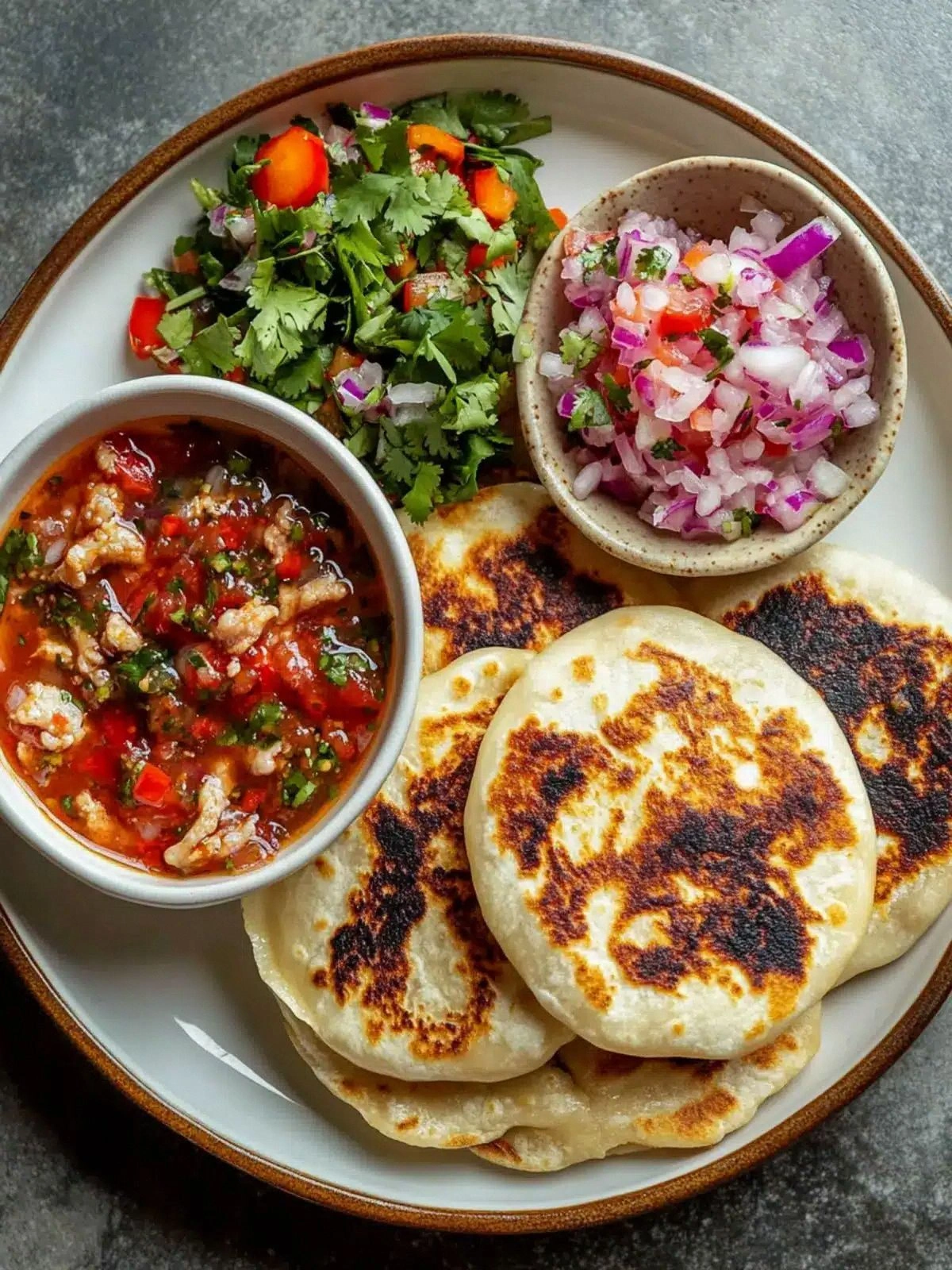
- While the pupusas rest, assemble the salsa roja. Combine the diced tomatoes, minced garlic, chopped cilantro, lime juice, jalapeño, salt, and pepper in a bowl. Let the salsa sit for 10 minutes to allow the flavors to meld.
- Prepare the cabbage slaw by whisking together the white vinegar, water, oregano, crushed red pepper flakes, salt, and pepper. Toss the shredded cabbage and carrot in the dressing until evenly coated.
- Serve the pupusas hot from the skillet, topped with a generous spoonful of salsa roja and a handful of crunchy slaw. The combination of warm, melty filling, bright salsa, and crisp slaw creates a flavor explosion that will leave your guests begging for more.
That’s it — you did it. But hold on, I've got a few more tricks that'll take this to another level.
Insider Tricks for Flawless Results
The Temperature Rule Nobody Follows
Many cooks start cooking the pupusas on too high a heat, which can burn the outside while leaving the inside undercooked. I always set my skillet to medium and let it heat up for a minute before adding the pupusas. The result is a golden, crisp crust that seals the filling perfectly. A friend once tried a high heat approach and ended up with a charred exterior and a soggy interior—don’t let that happen to you.
Why Your Nose Knows Best
Before you flip a pupusa, give it a quick sniff. A golden, toasted aroma indicates the bottom is done. If it smells undercooked, give it another minute. This sensory checkpoint saves you from the dreaded “pupusa that’s still raw inside” moment.
The 5-Minute Rest That Changes Everything
After cooking, let the pupusas rest for five minutes. This brief pause allows the cheese to set slightly, preventing a messy, oozing mess when you cut into them. I’ve seen people cut right after cooking and end up with a cheese avalanche—don’t be that person.
Use a Non-Stick Pan for Extra Crunch
A high‑quality non‑stick skillet ensures even cooking and makes flipping the pupusas a breeze. If you don’t have one, a well‑seasoned cast‑iron pan works wonders. The key is to keep the heat consistent so the crust forms without burning.
Keep the Sauce Cool
Serve the salsa roja cold or at room temperature. A warm salsa can melt the cheese inside the pupusa, ruining the texture. If you’re preparing the salsa ahead, keep it in the fridge until you’re ready to serve.
Creative Twists and Variations
This recipe is a playground. Here are some of my favorite ways to switch things up:
Mexican Street‑Food Pupusas
Swap the mozzarella and queso fresco for a blend of Oaxaca and Chihuahua cheeses. Add a spoonful of refried beans to the filling for extra texture. Serve with a side of guacamole and lime wedges for an authentic street‑food vibe.
BBQ Pulled Pork Pupusas
Use pre‑cooked BBQ pulled pork instead of slow‑cooked shoulder. Stir in a tablespoon of your favorite BBQ sauce into the filling. Top with a drizzle of smoky BBQ sauce after cooking for a finger‑licking finish.
Vegan Pupusas
Replace the pork with sautéed mushrooms and lentils. Use a plant‑based cheese alternative or a blend of nutritional yeast and cashew cream. The salsa remains the same, providing a bright counterpoint.
Breakfast Pupusas
Fill the pupusas with scrambled eggs, crumbled bacon, and shredded cheddar. Serve with a side of fresh fruit and a dollop of Greek yogurt. This twist turns the dish into a hearty breakfast or brunch option.
Spicy Thai Pupusas
Add a tablespoon of red curry paste to the pork filling. Replace the traditional salsa with a cilantro‑lime Thai dipping sauce. Finish with a sprinkle of toasted sesame seeds for an extra crunch.
Sweet Potato Pupusas
Blend cooked sweet potato into the masa dough for a subtle sweetness. Keep the pork and cheese filling the same. Serve with a drizzle of honey and a sprinkle of cinnamon for a dessert‑like twist.
Storing and Bringing It Back to Life
Fridge Storage
Cool the cooked pupusas completely before refrigerating. Store them in an airtight container for up to 3 days. The dough will stay firm, and the filling will remain moist.
Freezer Friendly
Wrap individual pupusas tightly in plastic wrap, then place them in a freezer bag. They can be frozen for up to 2 months. Thaw overnight in the fridge before reheating.
Best Reheating Method
Reheat frozen pupusas in a skillet over medium heat, adding a splash of water to create steam. Cover for a minute, then flip to ensure even heating. A tiny splash of water before reheating steams the pupusas back to perfection.