I still remember the night I ruined three batches of take-out Thai red curry in a row. The first was watery, the second scorched, and the third tasted like someone had dissolved a cinnamon candy in dishwater. I was chasing the memory of a tiny Bangkok street stall where the vendor ladled soup so fragrant that motorcycles slowed down just to sniff the air. At 2 a.m., standing over my stove in mismatched socks, I finally cracked the code: treat the curry paste like a jealous friend, coax the coconut milk like it's shy, and never—ever—let the lemongrass boil. The payoff is a soup that tastes like you teleported to a night market, complete with the neon hum and distant tuk-tuk horns. If you've ever been disappointed by bland, one-note Thai red curry soup, prepare for redemption in a bowl. I dare you to taste this and not go back for seconds.
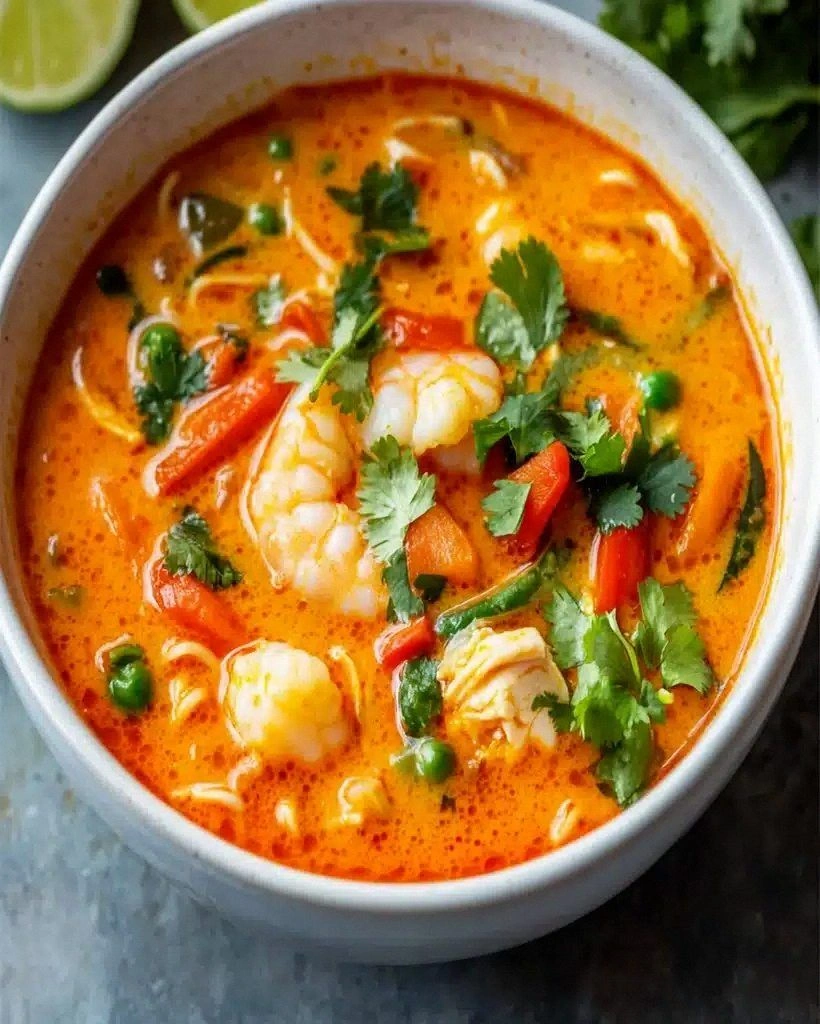
Picture yourself pulling this out of the pot, the whole kitchen smelling like kaffir lime and toasted spices, steam curling up like it's auditioning for a perfume commercial. The broth is silky, the color of sunset after a tropical storm, with tiny droplets of crimson oil shimmering on top like liquid rubies. One spoonful and your tongue gets a roundhouse kick of chile, followed by the creamy calm of coconut, then the citrusy high-five of lemongrass and lime. Most recipes get this completely wrong by dumping everything in at once and praying. Here's what actually works: layer the aromatics, bloom the paste until it splits, and finish with a whisper of palm sugar so the heat has something to hold hands with. Stay with me here—this is worth it.
I'll be honest—I ate half the batch before anyone else got to try it, hunched over the counter, slurping straight from the ladle like a raccoon with a PhD in flavor. My neighbor knocked to complain about the smell “haunting” her hallway; she left holding a take-home container and a sheepish grin. This version is hands down the best you'll ever make at home because it balances restaurant-level depth with week-night ease. No hunting for obscure galangal? Use ginger and a pinch of mace. Hate slimy chicken? Swap in tofu that drinks up the sauce like a sponge. Okay, ready for the game-changer? We're starting with cold coconut milk—yes, cold—and letting it heat slowly so the fat emulsifies instead of turning into an oil slick. Let me walk you through every single step—by the end, you'll wonder how you ever made it any other way.
What Makes This Version Stand Out
Depth: We toast the curry paste in the thick cream from the top of the coconut milk until it darkens two shades and smells like candied chiles. Most recipes rush this; we give it a full five minutes, which unlocks smoky, almost chocolate bass notes you never knew existed.
Speed: From fridge to bowl in 35 minutes flat, thanks to thin-sliced chicken that poaches directly in the broth and pre-julienned carrots that cook in the time it takes to set the table. Future pacing: imagine walking in the door after work and slurping this before the mail arrives.
Flexibility: Vegetarian? Use crumbled tempeh and vegetable stock. Keto? Skip the sugar and add an extra can of coconut cream. Each path still lands you in the same zip code of incredible.
Texture: We add a handful of rice noodles only in the bowls we're serving immediately; the rest of the broth stays silky and can be reheated without turning into starchy wallpaper paste.
Heat with training wheels: The curry paste gets seared, which tames its raw fire, then a spoon of peanut butter rounds off the edges like a diplomatic bartender. You can still crank it up with bird's-eye chiles if you're the type who signs emails “Kind regards” but secretly chews on Thai chiles for sport.
Make-ahead magic: The broth tastes even better the next day, so you can host a week-night dinner party by reheating and looking like a culinary wizard. Just cook fresh noodles and you're golden.
Alright, let's break down exactly what goes into this masterpiece...
Inside the Ingredient List
The Flavor Base
Red curry paste is the tattooed bandleader here—look for one where chiles, garlic, and shrimp paste top the list, not just salt and paprika. If you've ever struggled with dull, flat soup, you're not alone—and I've got the fix: fry that paste until it splits and the oil turns Day-Glo red. Coconut milk should be the full-fat kind that plops out of the can like slow-motion ice cream; light versions water out faster than a cheap tent in a thunderstorm. Lemongrass brings the citrus perfume—bruise the stalk with the back of a knife first to wake up the oils, then slice so thin it practically dissolves.
The Texture Crew
Chicken thigh beats breast every single time because it forgives a few extra minutes of simmering and stays juicy rather than turning into pencil erasers. Rice noodles soften in minutes and act like edible ribbons tying everything together; if you can't find them, angel-hair pasta broken into two-inch shards works in a pinch. Carrots contribute sweetness and color contrast, but bell peppers or snap peas jump in just as happily. And now the fun part: a handful of bean sprouts tossed in at the end so you get that cool, crunchy pop against the hot broth.
The Unexpected Star
Fish sauce smells like a fishing dock on a hot day, but two teaspoons disappear into the soup and leave behind an irresistible umami bass line that salt alone can't hit. If you're vegetarian, soy sauce plus a crumble of dried seaweed mimics the briny depth. Palm sugar has a faint caramel note that white sugar misses; if you can't find it, dark brown sugar plus a drop of molasses is your stunt double. And lime zest—not just juice—because the oils in the skin carry bright top notes that make the whole bowl sing.
The Final Flourish
Thai basil smells like licorice kissed a mint leaf; tear it, don't chop, or the edges bruise and turn black. A final squeeze of lime right before serving perks up the flavors like a splash of cold water on a sleepy face. Crispy shallots from the Asian aisle add onion-ring crunch without the work, and they keep for months in your pantry. If you want to feel fancy, drizzle a tablespoon of coconut cream in a spiral on top; it'll melt into creamy hearts that make everyone fight for the center of the bowl.
The Method — Step by Step
- Start with a cold heavy pot—yes, cold—so the coconut cream doesn't scorch while you're hunting for the curry paste. Scoop the thick cream from the top of an unshaken can and drop it into the pot; save the watery milk for later. Turn the heat to medium-low and stir until the cream melts like liquid silk and smells like tropical vacation sunscreen. This gentle heat prevents the proteins from seizing into gritty curds, which is the difference between velvet and wet sandpaper.
- Add two heaping tablespoons of red curry paste and prepare for the sizzle that sounds like applause. Stir constantly for five minutes; the paste will darken from bright scarlet to brick red and the oil will separate into tiny crimson droplets—this is called "splitting" and it's pure magic. Don't rush it; if you do, the raw garlic and shallot in the paste will taste like green onions dipped in gasoline. Your kitchen should smell like chile, lemongrass, and something vaguely smoky, like a beach bonfire of spices.
- Toss in the thin-sliced chicken thigh, separating each piece so it hits the hot fat and turns opaque within seconds. Sprinkle a pinch of salt now; it seasons the meat and pulls juices to the surface, creating a micro-broth that mingles with the curry. Stir until the edges turn white and slightly curled—this takes about two minutes, max. Overcooking here is like over-tanning; once it happens, there's no going back.
- Pour in the remaining coconut milk and two cups of low-sodium chicken stock, scraping the bottom to lift any browned bits—that's flavor gold. Add bruised lemongrass, torn kaffir lime leaves, and a thumb of ginger sliced paper-thin so it infuses fast. Bring to the gentlest simmer you can manage; big rolling bubbles will make the coconut oil break and float on top like an orange oil slick. The surface should shimmer like silk scarves in a breeze.
- Slide in julienned carrots and let them bob around for three minutes; they should stay bright orange and still have snap. Add palm sugar, fish sauce, and a tablespoon of lime juice, then taste—the broth should hit you with sweet first, then salty, then a warming heat that blooms slowly like a time-lapse flower. If it tastes flat, add another dash of fish sauce; if it's too salty, a teaspoon of sugar will balance it like a tight-rope walker. This is the moment of truth where you become the flavor DJ.
- Drop rice noodles into the pot only if you're serving everyone at once; otherwise cook them separately so they don't slurp up all the broth like thirsty teenagers. Fresh noodles take 90 seconds, dried ones about four—taste for that al dente snap that still fights back gently against your teeth. Stir in half the Thai basil so the heat wilts it and releases anise perfume into the steam cloud hovering over your stove. The soup should now look like molten sunset with confetti vegetables floating in happy chaos.
- Ladle into deep bowls, scatter the remaining basil, crispy shallots, and a final squeeze of lime. Serve immediately—this soup waits for no one, and the noodles will keep drinking broth until they turn into bloated sea creatures. Garnish with a drizzle of coconut cream in a lazy spiral; it melts into heart-shaped puddles that make everyone grab their phones for photos before the first bite. That first spoonful should taste like you dove head-first into a Thai beach party where the chiles are doing the limbo and the limes are the DJ.
That's it—you did it. But hold on, I've got a few more tricks that'll take this to another level...
Insider Tricks for Flawless Results
The Temperature Rule Nobody Follows
Keep the soup below 205°F (93°C) once the coconut milk is in; anything hotter and the proteins unravel like cheap sweaters, turning the broth gritty. Use an instant-read thermometer or hover your hand over the surface—if you can hold it there for four seconds, you're in the sweet spot. A friend tried skipping this step once; let's just say her soup looked like orange cottage cheese floating in dishwater.
Why Your Nose Knows Best
When the curry paste is ready, it will smell toasty and slightly sweet, never raw or harsh. If you still catch a whiff of sharp garlic, keep stirring for another minute. Think of it like roasting coffee—first comes grassy, then nutty, finally caramel bliss. Trust your nose more than the clock; every stove and paste brand is a unique snowflake.
The 5-Minute Rest That Changes Everything
After cooking, let the pot sit off heat for five minutes with the lid slightly ajar. This lets the flavors mingle and the residual heat finish the noodles without turning them into mush. It's like letting a red wine breathe—suddenly the soup tastes deeper, rounder, and mysteriously more expensive.
Double the Paste, Triple the Life
If you want meal-prep magic, fry double the curry paste and freeze half. Later, you can whip up this soup in ten minutes by just heating broth and coconut milk, then whisking in your pre-toasted paste. It keeps for three months and turns a Thursday night fridge clean-out into a spa weekend.
Creative Twists and Variations
This recipe is a playground. Here are some of my favorite ways to switch things up:
Seafood Velvet Version
Swap chicken for peeled shrimp and chunks of firm white fish; they poach in under three minutes and turn the broth into ocean silk. Add a splash of clam juice for extra briny back-notes and finish with cilantro stems instead of basil for a brighter, greener perfume.
Green Curry Glow-Up
Use green curry paste and swap lime for makrut lime zest plus a teaspoon of honey. The color turns jade-green and the flavor is more herbal, like licking a wet garden after a rainstorm. Kids love the milder heat and slightly sweet finish.
Creamy Vegan Thunder
Sub tempeh cubes seared until golden, use vegetable stock, and add a spoon of fermented bean paste for funky depth. Finish with a swirl of oat milk creamer for body and smoked paprika for a bacon-ish whisper without the pig.
Noodle-Free Zing
Skip the rice noodles and serve the broth over spiralized zucchini that you've flash-sautéed for 60 seconds. It's keto-friendly and the zucchini drinks up the sauce like tiny edible straws. Top with toasted sesame seeds for nutty crunch.
Breakfast Curry Soup
Ladle the hot broth over a nest of fresh bean sprouts and a soft-boiled egg. The yolk melts into the broth and turns it into breakfast custard with a kick. Serve with a side of buttered toast for dunking and you've got hangover kryptonite.
Cold-Night Comfort
Add a diced sweet potato and a handful of kale; simmer until the potato cubes turn into velvety pearls that thicken the broth naturally. It's like curry and creamy chowder had a cozy fireplace baby.
Storing and Bringing It Back to Life
Fridge Storage
Cool the soup completely, then transfer to airtight glass jars; the broth keeps for four days, but store noodles separately so they don't swell into sea monsters. Leave a half-inch space at the top because coconut broth expands like a moody teenager.
Freezer Friendly
Freeze the broth (minus noodles and herbs) in zip-top bags laid flat; they'll stack like flavor records and thaw in minutes under warm tap water. Keeps three months without loss of swagger. Pro tip: write the date and “spicy!” on the bag so midnight future-you doesn't feed it to spice-averse guests.
Best Reheating Method
Gently warm in a covered pot over low heat, stirring often; add a splash of water or stock to loosen because the coconut thickens when cold. Add fresh noodles and herbs only after the broth is steaming, never during reheating, or you'll get kindergarten paste. Microwave works in a pinch—use 50% power and stir every 30 seconds like you're babysitting lava.