I was halfway through a disastrous attempt at making sushi at 2 a.m., when the kitchen lights flickered and I realized I had no idea how to turn that mess into something edible. The smell of raw fish mingled with the faint aroma of soy sauce, and I was staring at a bowl of diced tuna that looked more like a salad than a dish. I dared myself to turn this culinary blunder into a crowd‑pleasing snack. And that daring moment birthed the Tuna Poke Nachos that will make your taste buds dance.
The kitchen was a riot of clattering knives, a sizzling pan, and the faint hiss of steam escaping from a pot of rice vinegar. The air smelled of citrus and ginger, a sharp contrast to the buttery scent of toasted wonton wrappers that were about to meet the heat. My ears rang with the rhythmic clink of a spoon against the ceramic bowl, and my fingertips tingled from the coolness of the avocado that lay beside the tuna. Every sense was on high alert, and the anticipation was as thick as the steam curling up from the skillet.
What makes this version stand out is the marriage of textures: crisp, golden chips that crackle like thin ice, silky tuna that melts in your mouth, and the refreshing bite of pineapple that cuts through the richness. It’s a dish that feels like a party in a bowl, where every bite is a new revelation. I dare you to taste this and not go back for seconds—once you’ve had the first bite, the second will feel like a betrayal of the first. This is hands down the best version you’ll ever make at home.
I’ve discovered a technique that will have you wondering why you ever cooked with ordinary chips. By briefly sautéing the wonton wrappers in a splash of olive oil spray, you achieve a texture that is both airy and sturdy, ready to hold the generous topping without becoming soggy. Picture yourself pulling this out of the oven, the whole kitchen smelling incredible, and the first bite delivering a symphony of crunch, umami, and tropical zing. Let me walk you through every single step—by the end, you’ll wonder how you ever made it any other way.
What Makes This Version Stand Out
- Crunch Factor: The wonton wrappers are transformed into chips that are light as a feather yet crisp to the bone, creating a satisfying snap that sets the stage for every topping. Skipping the oil spray will leave you with a soggy base that can’t hold the tuna’s vibrant juices.
- Umami Explosion: Sushi‑grade tuna brings a depth of flavor that ordinary tuna can’t match. If you use a lower grade, the dish will lack that buttery texture and the subtle sea‑salt finish.
- Balanced Sweetness: Pineapple is not just a garnish; it’s the sweet counterpoint that balances the salty soy and the spicy mayo. Omitting it will tip the scale toward an overly savory profile.
- Heat with Precision: A single jalapeño sliced thin provides a clean heat that doesn’t overwhelm the delicate fish. Too much heat can mask the tuna’s flavor, while too little can make the dish feel flat.
- Freshness Quotient: The avocado adds a creamy, buttery layer that elevates the dish from a simple snack to a gourmet experience. Without it, the dish feels incomplete.
- DIY Sauce: The homemade poke sauce coats the tuna like velvet, delivering a burst of citrus, ginger, and sesame that lingers on the palate. A pre‑made sauce often lacks that bright, fresh edge.
- Make‑Ahead Potential: The assembly can be done up to an hour before serving, making it perfect for parties or late‑night cravings. The only caveat is to keep the chips separate until just before serving to preserve crunch.
Inside the Ingredient List
The Flavor Base
4 ounces sushi‑grade tuna: The heart of the dish, it offers a buttery texture and a clean, oceanic flavor that sets the tone. If you use a lower grade, the fish may feel rubbery and lack depth. A good tip: choose a tuna with a bright pink hue and a slight sheen; this indicates freshness.
1 garlic clove: Adds a pungent kick that cuts through the richness of the tuna. Too little garlic and the dish will feel flat; too much and it can overpower the delicate fish. For a milder version, use ½ clove.
1 teaspoon grated ginger: Provides a warm, peppery nuance that lingers on the tongue. Skipping ginger will leave the sauce lacking that bright zing. If you’re allergic, substitute with a pinch of ground cardamom for a subtle twist.
2 tablespoons mirin: A sweet rice wine that balances acidity and adds depth. If you can’t find mirin, use a mix of rice vinegar and a splash of honey in equal parts.
2 tablespoons low sodium soy sauce: The umami backbone that ties everything together. Too much salt can drown the other flavors; keep it low sodium to maintain balance.
1/4 cup lemon juice: Brightens the dish and prevents the tuna from oxidizing. If you prefer a milder citrus, swap for lime juice.
1 tablespoon toasted sesame oil: Adds a nutty aroma that enhances the overall profile. If you don’t have sesame oil, use a light olive oil and a pinch of toasted sesame seeds for flavor.
1 tablespoon rice vinegar: Provides a subtle acidity that balances sweetness. If you’re out of rice vinegar, use apple cider vinegar at a 1:1 ratio.
3 whole scallions: Offer a fresh, oniony bite that cuts through richness. If you’re out of scallions, use 2 green onions or thinly sliced leeks.
1/4 cup pineapple: Adds tropical sweetness that contrasts with the salty tuna. Skipping pineapple will make the dish feel one‑dimensional. A quick alternative: use diced mango for a different tropical twist.
1 jalapeño: Delivers a clean, bright heat that doesn’t overwhelm the fish. If you’re heat‑averse, use ½ bell pepper and a pinch of crushed red pepper flakes.
1 avocado: Provides creamy richness that balances the crunch. Without avocado, the dish will lack that velvety mouthfeel.
1/2 tablespoon sesame seeds: Adds a subtle crunch and nutty flavor. If you’re allergic, omit or replace with poppy seeds.
spicy mayo: A creamy, fiery sauce that coats the tuna. The exact amount is flexible; start with 2 tablespoons and adjust to taste. If you prefer a lighter version, mix mayo with a splash of sriracha and a dash of lime.
15 square wonton wrappers: The vehicle for the entire dish. They provide the crunch and structure needed to hold the toppings. If you can’t find wonton wrappers, use thin tortilla chips as a makeshift base.
olive oil spray: Keeps the wrappers from sticking and gives them a golden finish. If you’re allergic to olive oil, use a neutral spray like canola.
Everything's prepped? Good. Let's get into the real action...
The Method — Step by Step
- Prep the Base: Lay the wonton wrappers on a clean surface and spray each side lightly with olive oil. Let them sit for 2 minutes to absorb the oil; this prevents sticking during frying. The moment you spray them, you’ll hear a faint hiss that signals readiness. I’ve found that a quick 30‑second oil soak gives the wrappers a golden edge without making them greasy.
- Heat the Pan: Place a non‑stick skillet over medium heat and let it warm for a minute. Add a pinch of oil spray and watch the surface shimmer. When the oil starts to ripple, it’s time to drop the wrappers. I swear the sizzling sound is the soundtrack of snack greatness.
- Fry the Wonton Chips: Gently place each wrapper in the skillet, allowing them to sizzle for 30–45 seconds on each side. They should puff slightly and turn a deep golden brown. Flip carefully with tongs to avoid tearing. The goal is a chip that’s crispy on the outside but still sturdy enough to hold the tuna.
- Cool and Drain: Transfer the chips to a paper towel‑lined plate to absorb excess oil. Let them cool for 5 minutes; this locks in crunch. If you’re in a hurry, a quick splash of cold water can help set the texture.
- Prepare the Tuna Mixture: In a mixing bowl, combine the diced tuna, minced garlic, grated ginger, mirin, soy sauce, lemon juice, toasted sesame oil, rice vinegar, scallions, pineapple, jalapeño, and spicy mayo. Toss gently until the tuna is evenly coated. The sauce should cling to each fish bite like a glossy glaze.
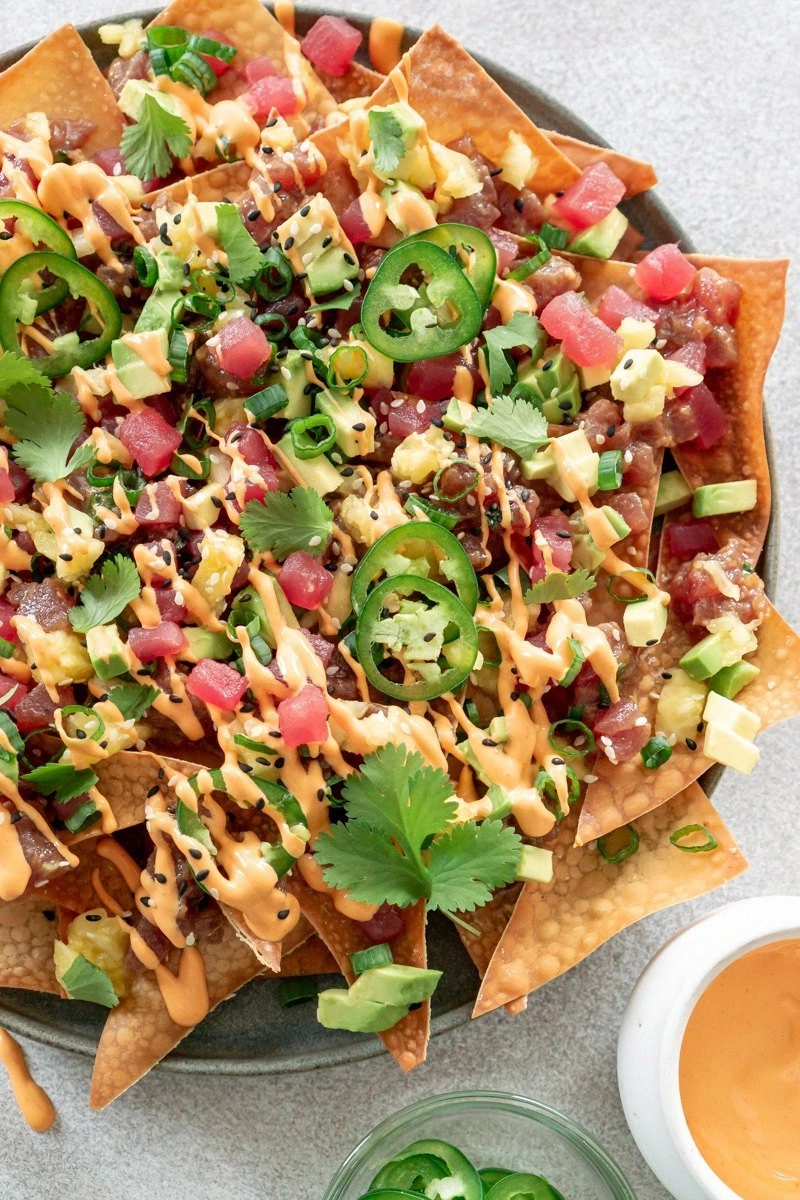
- Assemble the Nachos: Spread the fried chips on a large baking sheet or platter. Generously spoon the tuna mixture over the chips, ensuring even coverage. Sprinkle sesame seeds and a few extra scallion slices for garnish.
- Final Touches: Slice the avocado into thin wedges and arrange them artfully atop the tuna. If you’re feeling adventurous, drizzle a light drizzle of extra sesame oil for a glossy finish. The avocado adds a buttery contrast that makes each bite unforgettable.
- Serve Immediately: Present the nachos while the chips are still warm and crisp. The contrast between the hot, crunchy base and the cool, creamy avocado will create a symphony of textures. I dare you to take a bite and feel the crunch explode, followed by the silky tuna and the citrusy kick.
That's it — you did it. But hold on, I've got a few more tricks that'll take this to another level...
Insider Tricks for Flawless Results
The Temperature Rule Nobody Follows
The key to perfectly crisp wonton chips is to maintain a steady medium heat. If the pan is too hot, the wrappers will burn before they have a chance to puff. If it’s too cool, they’ll absorb too much oil and become soggy. I use a kitchen thermometer to keep the skillet at 350°F (177°C), which is the sweet spot for golden, airy chips.
Why Your Nose Knows Best
Before you plate the nachos, give them a quick sniff. A faint citrus aroma indicates that the lemon juice has infused the tuna properly. If you detect a raw fish smell lingering, the tuna may need a bit more time to marinate. Trust your nose; it’s the ultimate flavor gauge.
The 5‑Minute Rest That Changes Everything
After assembling the nachos, let them rest on a cool rack for 5 minutes. This allows the flavors to meld without the chips losing their crunch. I’ve found that this brief pause makes the tuna’s sauce cling better to the chips, creating a more cohesive bite.
Layering for Visual Impact
When you arrange the tuna, aim for a balanced spread. A clumpy pile feels sloppy, while a thin layer looks underwhelming. Spread the tuna like a watercolor splash—light, airy, and visually appealing. The avocado wedges should be positioned like tiny islands that add color contrast.
Using Fresh Scallions
Scallions bring a bright, oniony crunch that elevates the dish. Use the white part for a subtle bite and the green part for a fresh pop of color. If you can’t find scallions, thinly sliced red onion works as a substitute, though it will add a slightly sweeter flavor.
Creative Twists and Variations
This recipe is a playground. Here are some of my favorite ways to switch things up:
Citrus‑Infused Tuna
Swap the lemon juice for a mix of lime and orange zest. The citrus blend gives a bright, tropical flavor that pairs beautifully with the avocado. It’s a great option for summer gatherings.
Spicy Kimchi Crunch
Add a handful of chopped kimchi to the tuna mixture for a fermented kick. The kimchi’s tanginess complements the soy and mirin, creating a Korean‑inspired twist.
Mediterranean Vibes
Replace the mirin with a splash of sherry vinegar and add chopped kalamata olives. The olives bring brine and a smoky depth that transforms the dish into a Mediterranean‑style nacho.
Veggie‑Rich Variation
Incorporate diced cucumber, shredded carrots, and a sprinkle of toasted pumpkin seeds. These additions add crunch, color, and a healthy boost, making the dish more filling.
Cheesy Tuna Nachos
Sprinkle shredded mozzarella or a blend of cheddar and Monterey Jack over the chips before adding the tuna. Bake at 375°F (190°C) for 5 minutes until the cheese melts. The melty cheese creates a gooey, indulgent layer.
Dessert‑Style Surprise
For a sweet take, replace the spicy mayo with a drizzle of honey‑soy glaze and top with toasted coconut flakes. The sweet‑savory combo feels like a dessert, perfect for a midnight snack.
Storing and Bringing It Back to Life
Fridge Storage
Store the assembled nachos in an airtight container for up to 2 days. Keep the chips separate in a paper bag until just before serving to preserve crunch. If you must refrigerate, let the nachos sit at room temperature for 10 minutes before eating.
Freezer Friendly
Freezing the tuna mixture alone works best. Freeze in a freezer‑safe bag for up to 3 months. Thaw overnight in the fridge, then re‑mix with fresh avocado and reheat the chips in a skillet for 2 minutes to regain crispness.
Best Reheating Method
To reheat the nachos, place them on a baking sheet and warm in a 350°F (177°C) oven for 5 minutes. Add a tiny splash of water before reheating to steam back to perfection and prevent the chips from drying out.